Two compact flagships, two very different ideas of what a small premium phone should do.
· 5 min read

The Xiaomi 18 Pro is the better phone for buyers who care about battery, zoom, selfies and price. The iPhone 18 Pro is the better one for people who film a lot of video, want the quickest single-core chip and already live in Apple's ecosystem. In Germany the Xiaomi is also 50 euros cheaper at the 256GB tier, at 1,399 euros against 1,449.
Specifications at a glance
| Feature | iPhone 18 Pro | Xiaomi 18 Pro |
|---|---|---|
| Display | 6.3-inch OLED, 2622 x 1206, 460 ppi, 120Hz | 6.4-inch LTPO, 2436 x 1120, 419 ppi, 1 to 120Hz |
| Claimed peak brightness | 3,000 nits outdoors | 4,000 nits multi-scenario |
| Second screen | None | 2.7-inch AMOLED on the back |
| Chip | A20 Pro, 6-core CPU | Snapdragon 8 Elite Gen 6, 2nm |
| Memory and storage | 256GB to 2TB, RAM not published | 12GB RAM, 256GB or 512GB, UFS 4.1 |
| Main camera | 48MP, f/1.48 to f/4.0, 24mm | 200MP, f/1.67, 23mm, 1/1.28-inch |
| Telephoto | 48MP, 4x at 100mm, f/2.8 | 200MP, 3.2x at 75mm, f/2.4 |
| Ultrawide | 48MP, 13mm, f/2.2 | 50MP, 17mm equivalent, f/2.4 |
| Front camera | 18MP, f/1.9 | 50MP, f/2.2, autofocus |
| Battery claim | 36 hours video, capacity not published | 6,000mAh silicon-carbon |
| Charging | 50% in about 15 minutes with a 60W adapter, 25W wireless | 90W wired, 50W wireless |
| Weight and thickness | 211g, 8.75mm | 198g, 8.46mm |
| Water resistance | IP68, 6 metres | IP68, 1.5 metres |
| Software | iOS 27 | HyperOS 4 |
| Price in Germany, 256GB | 1,449 euros | 1,399 euros |
Apple's figures come from its technical specifications page and German store, and Xiaomi's from its global specifications page. The two brightness numbers are measured under different conditions, so the gap between them is not a like-for-like result.
Design and display
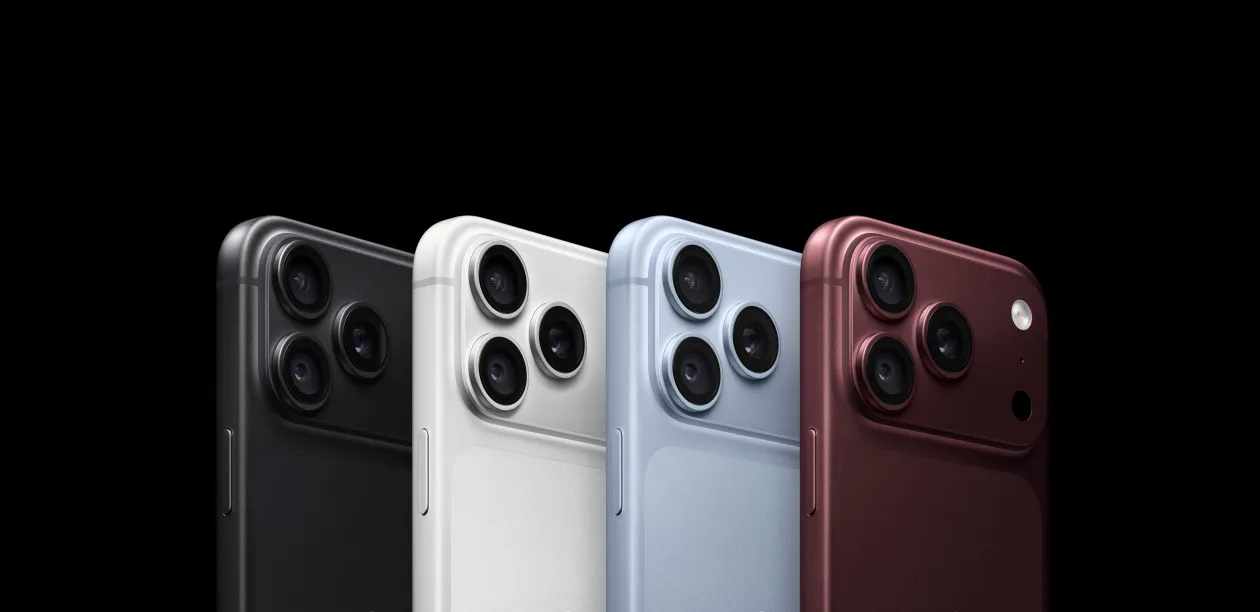
Both phones are compact, and the Xiaomi is the lighter one at 198g, or 203g in Cosmic Blue. Apple wins on toughness on paper, with a Ceramic Shield front and back and an IP68 rating tested to 6 metres, while Xiaomi's IP68 claim covers 1.5 metres for 30 minutes. The iPhone's screen is sharper at 460 ppi, while the Xiaomi's is brighter on paper and adds a hardware Privacy Display. Xiaomi itself warns that content can stay visible at some angles, and Notebookcheck's hands-on found the filter weak.
The bigger difference is on the back. The Xiaomi's 2.7-inch panel shows notifications, runs small AI-generated apps and works as a viewfinder, so the main camera can shoot selfies. Apple has no equivalent.
The Xiaomi's back screen is more than a gimmick, because it turns its best cameras into selfie cameras.
Performance
Apple's A20 Pro has two super cores, four efficiency cores and a larger vapour chamber, which Apple says improves sustained performance by up to 40 percent over the 17 Pro. Xiaomi pairs the Snapdragon 8 Elite Gen 6 with its 3D IceLoop cooling. NanoReview's aggregated listings put the iPhone's Geekbench 6 single-core score near 4,719 against about 3,866 for the Xiaomi, while the Xiaomi leads the overall AnTuTu tally at roughly 4.89 million to 3.43 million. These are aggregates rather than our own tests, and both phones will handle any app or game without trouble.
Cameras
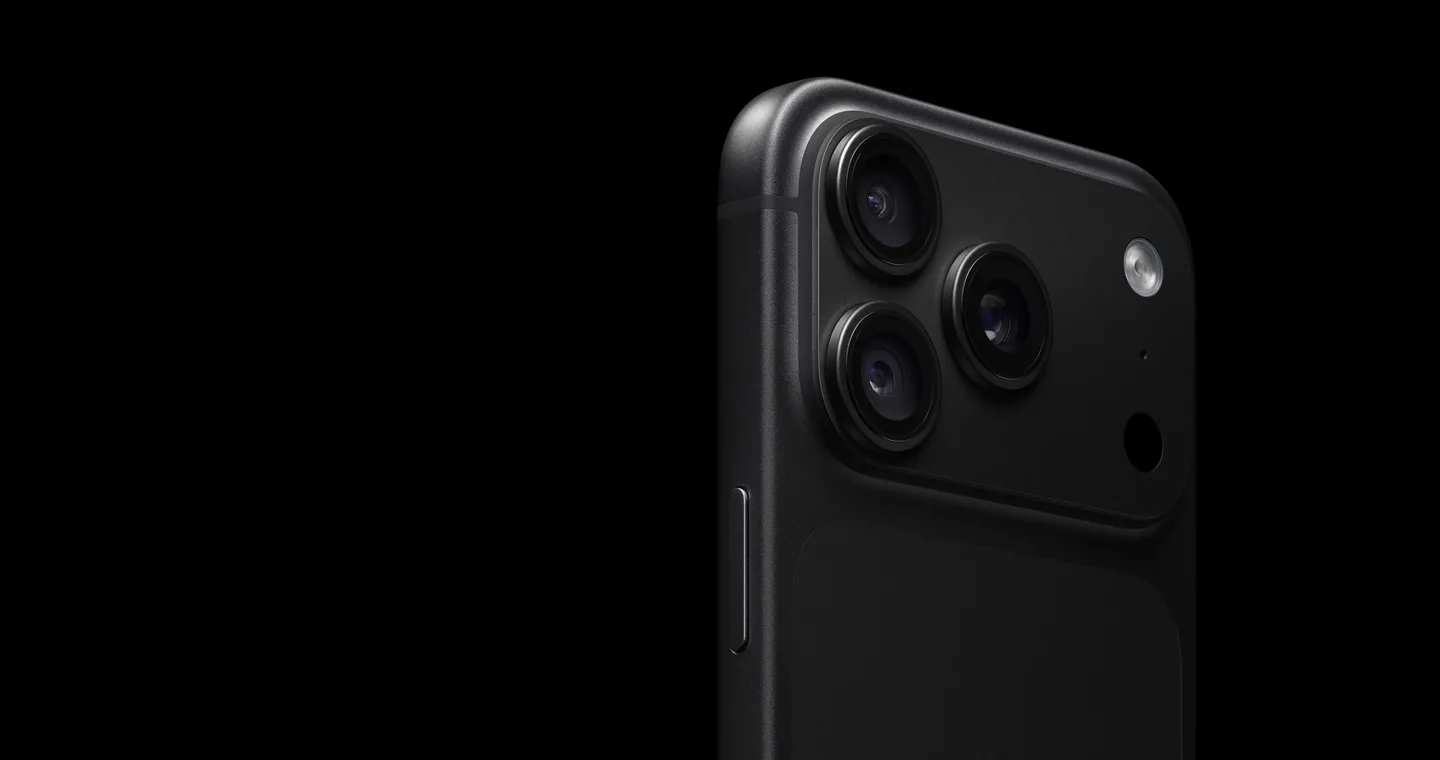
On paper the Xiaomi has the stronger hardware. Its two 200MP cameras use a 1/1.28-inch main sensor, the same size PhoneArena lists for the iPhone's main camera, and a 1/1.56-inch telephoto sensor that is much larger than Apple's 1/2.55-inch one. PhoneArena's reviewer preferred the Xiaomi's 3.2x focal length for portraits, expects its bigger telephoto to help at night, and called its rear-camera selfies the best he had seen on a phone. The Xiaomi also focuses as close as 12 centimetres through the telephoto.
The iPhone fights back with reach and video. Its 48MP telephoto adds an 8x optical-quality crop at 200mm, and it records 4K Dolby Vision at 120fps with ProRes RAW and Apple Log 2. Xiaomi offers 8K at 30fps and 4K at 120fps with Log. The ultrawide is the Xiaomi's compromise: PhoneArena notes it is less wide than Apple's 13mm lens, while GSMArena rated the iPhone's own ultrawide the weakest of its three cameras and found its variable aperture of limited practical use.
Battery and charging
Xiaomi lists a 6,000mAh cell and says its labs measured 1.52 days of use. Apple does not publish capacity and claims up to 24 hours of typical use and 36 hours of video playback. We found no head-to-head endurance test. Tom's Guide recorded 16 hours 17 minutes of browsing on the iPhone, and Android Headlines logged 12 hours 33 minutes on the Xiaomi in a looping benchmark, but those are different tests.
Charging is closer than the numbers suggest. GSMArena fully charged the iPhone in 1 hour 2 minutes with a 67W charger, and Android Headlines needed 1 hour 9 minutes for the Xiaomi, although the chargers differed. Neither company includes a power adapter in the box.
Software and extras
The iPhone runs iOS 27 with Face ID, and Apple says its new Siri AI will not initially reach the EU. The Xiaomi runs HyperOS 4 with Gemini built in, an ultrasonic fingerprint reader and a choice of nano SIM or eSIM, where the iPhone is eSIM only. Tech Advisor found ads in the Xiaomi's wallpaper and theme menus and preinstalled apps, which is a real irritation at this price. Neither maker's page states an update period, though Android Headlines reported four years for the Xiaomi. Xiaomi's page does list one free screen replacement within 24 months and one free battery replacement within 36 months, subject to its terms.
Price
Apple's German store lists the 6.3-inch iPhone 18 Pro at 1,449 euros for 256GB and 1,699 euros for 512GB, including 19 percent VAT. Xiaomi's European prices are 1,399 and 1,599 euros, according to Notebookcheck and Beebom. In the United States the iPhone starts at $1,199, and our sources gave no US price for the Xiaomi. Prices were checked on November 25, 2026.
Which should you buy?
Buy the Xiaomi 18 Pro if battery life, a strong telephoto, selfies and a lower price matter most, and you can live with the ultrawide and the ads. Buy the iPhone 18 Pro if you shoot serious video, want the fastest single-core performance, value its tougher water rating and Face ID, or already own a Mac or an Apple Watch. Our iPhone 18 Pro review and Xiaomi 18 Pro review cover each phone in more depth, and our launch report has the full European price list.
Published November 25, 2026. Gadgets365 will update this article as more information becomes available.
Editor
Pravin KankanePravin Kankane is the editor of Gadgets365, an independent technology publication based in Pune, India. He covers smartphones, AI, Apple, Android and consumer tech launches in India.