A day after Anthropic mathematician Levent Alpöge posted a machine-checkable proof, the Lean and Mathlib communities say it holds, though the ideas still await human scrutiny.
· 4 min read
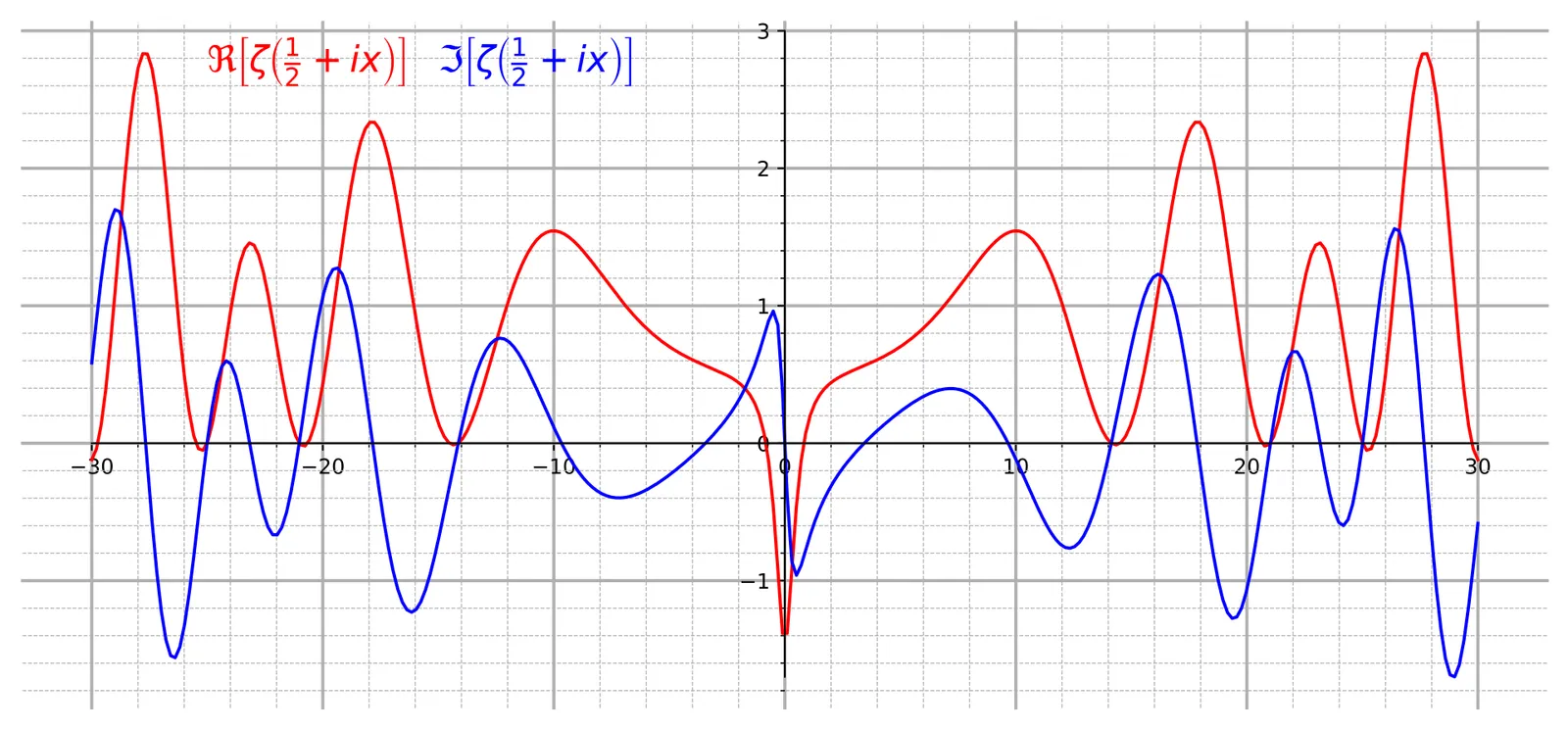
Anthropic mathematician Levent Alpöge announced on November 20 that he and Claude have found a proof of the Riemann Hypothesis, and within a day the Lean and Mathlib communities certified that the formal proof checks out. The claim arrives as a computer-checked library of about 17 million lines of code, not as a paper that human referees have read.
What Alpöge released
Alpöge posted a short note on his website saying he believes the argument, developed with Claude, proves the hypothesis and extends to the Generalized Riemann Hypothesis for Dirichlet L-functions. The proof itself is a Lean library split across 14 archive files that hold 175,187 source files, according to a verification page kept by MIT mathematician Andrew Sutherland. Lean is a proof assistant, a program that accepts an argument only if every step reduces to a small set of fixed logical rules.
Sutherland's page lists five theorems that the library proves. The first is the Riemann Hypothesis exactly as Mathlib, Lean's shared mathematics library, defines it: every zero of the zeta function other than the trivial ones at negative even integers has real part one half. The other four cover every Dirichlet L-function, for all moduli and characters, including the primitive characters normally used to state the generalized version. Dedekind zeta functions, Hecke L-functions and automorphic L-functions were not part of what was checked.
The Lean and Mathlib verdict
On November 21 the Lean and Mathlib communities, endorsed by the Lean FRO and the Mathlib Initiative, published a joint statement saying they have "full confidence that Alpöge's proof of the Riemann Hypothesis is correct". They rested that on four checks. The statement being proved is the one Mathlib already contains, and experts had vetted it. Dozens of people compiled the library and reproduced the same exported proof file. Two independent tools confirmed that the theorem the library proves is identical to Mathlib's statement. Several proof checkers, among them Lean's official kernel and independent ones written in different programming languages, accepted the exported proof.
Two of those checkers, con-leche and con-ron, come with a formal proof that they cannot accept a false argument, which answers the worry that a flaw in Lean's own logic could be exploited. The checks ran on an inert export of the proof, out of reach of any malicious code that might hide in the source files.
Sutherland's independent checks
Sutherland's page, last updated at 02:25 UTC on November 22, reports that all 175,187 modules compile with zero errors and that the five headline theorems rest only on Lean's three standard axioms. A rebuild inside a sandbox on a separate machine reproduced the 61.57 billion byte proof export byte for byte, and nanoda, an independent kernel written in Rust, accepted the full export in about 28 minutes on 80 threads. Some checks, including Lean's default kernel on the export and an end-to-end comparator run, were still running at that point. Sutherland notes that he ran his checks with Claude Code, Anthropic's coding tool, a detail worth keeping in mind because the proof was also built with Claude.
What is still open
A passing check shows that the formal statements follow from the standard axioms according to the kernels used, and it relies on Mathlib's definitions meaning what they are meant to mean. It does not explain why the result is true. The human-readable write-up that Alpöge has promised has not yet appeared, according to Startup Fortune, and Anthropic had not issued a separate statement in the reports reviewed. One report notes that mathematicians have yet to judge the underlying ideas, as opposed to the code.
Sutherland also combined the proof with a separate Lean formalization of Robin's criterion, which links the hypothesis to the sum of a number's divisors. The combination yields Robin's inequality for every whole number above 5,040, along with the related Lagarias inequality, both stated without any mention of the zeta function.
How this follows August's result
This is not Claude's first attempt at the problem. In August Anthropic described how a staff member asked an unreleased Claude model to make a serious attempt at the hypothesis. According to a DataCamp summary of the company's note, the model did not prove it, but it raised the proven share of zeta zeros on the critical line from about 41.6 percent to above 67 percent, and Alpöge and Ralph Furman reviewed that work internally. The November claim moves from a partial bound to the full statement. Gadgets365 covered the company's market debut in its Nasdaq listing report, and Google DeepMind's earlier work on AI agents probing legacy RSA shows how quickly such systems have moved into mathematics.
What to watch next
The Riemann Hypothesis, posed in 1859, says that every nontrivial zero of the zeta function lies on one vertical line, a statement that governs how evenly the primes are spread. If the certified proof survives human reading, many results that mathematicians have long stated conditionally on it would become unconditional. The next milestones are the promised write-up, scrutiny from number theorists, and the remaining kernel checks on Sutherland's page.
Published November 23, 2026. Gadgets365 will update this article as more information becomes available.
Editor
Pravin KankanePravin Kankane is the editor of Gadgets365, an independent technology publication based in Pune, India. He covers smartphones, AI, Apple, Android and consumer tech launches in India.