Apple Pay Finally Launches in India, Starting With Axis Bank Credit Cards Only
The service went live on September 30 for eligible Axis Bank Visa and Mastercard credit cards. RuPay, debit cards and the biggest issuers are not part of the launch.
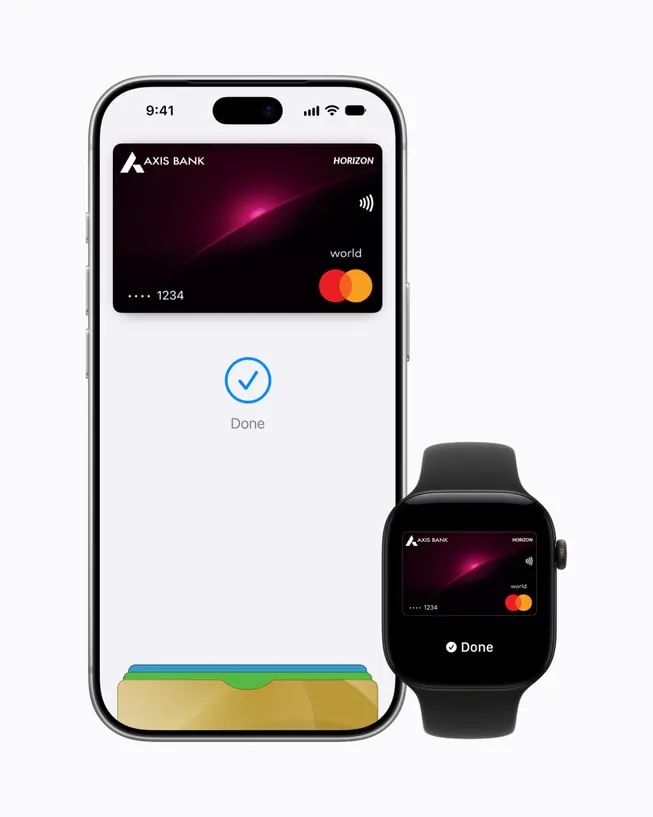
Apple Pay has launched in India, more than twelve years after its 2014 US debut. The rollout began on September 30 India time (September 29 in the US) through a partnership with Axis Bank, and is limited to Axis Bank credit cards on the Visa and Mastercard networks. It works on iPhone, iPad and Apple Watch, with Mac support "coming soon" (TechCrunch, MacRumors).
What works today
Holders of an eligible Axis Bank Visa or Mastercard credit card can add it to Apple Wallet through the Axis Bank app or directly in Wallet, then pay at contactless NFC terminals and online or in apps that accept Apple Pay. Not every Axis card qualifies; Wallet shows whether a card can be added. Axis Bank is India's fourth-largest credit card issuer, with 16.3 million cards outstanding as of August out of 124 million nationwide, according to Reserve Bank of India data cited by Reuters.
| At launch | Supported? |
|---|---|
| Axis Bank Visa and Mastercard credit cards | Yes (eligible cards) |
| RuPay network | No |
| Debit cards | No |
| American Express | No |
| HDFC Bank, ICICI Bank, SBI Card | No |
| iPhone, iPad, Apple Watch | Yes |
| Mac | Coming soon |
HDFC Bank, ICICI Bank and SBI Card, three of India's largest issuers, are not on board as talks over commercial terms continue. Reports say Apple charges issuers 15 to 20 basis points per transaction, figures Apple has not confirmed (Business Today). Apple says more banks and cards will follow but has not named any, and a mid-October Forbes analysis still described Axis as the only issuer (Forbes).
Apple says Apple Pay will be accepted at "millions of merchants," naming Apple Store locations, Blinkit, Chaayos, Comet, Croma, Interflora, Ixigo, Le15 Patisserie, Reliance brands, Tata 1mg and Zomato, with payment providers Cashfree, JusPay, Mswipe, Paytm, PayU, Pine Labs, Razorpay and Worldline enabling acceptance.
Why India is a hard market for Apple Pay
The Unified Payments Interface handles 84 percent of India's digital payment volume and is the world's largest retail fast-payment system by transactions, according to a 2025 IMF report cited by Reuters. UPI moves money between bank accounts by QR code with no card and no consumer fee, which makes card-based contactless payments a secondary option for most Indian transactions.
Jennifer Bailey, Apple's vice president of Apple Pay and Apple Wallet, said India "is home to a dynamic and digitally savvy population that continues to embrace a cashless future while expecting the highest standards of security and privacy." Axis Bank chief executive Amitabh Chaudhry called it a step toward "a more connected and sophisticated payments ecosystem," and Visa's Suresh Sethi called it "an important milestone in India's digital payments journey."
How the security model works
Apple says card numbers are never stored on the device or its servers or shared with merchants. Each card gets a unique Device Account Number, encrypted and stored in the Secure Element chip. Apple says it does not keep transaction data that can be linked to the user, and Find My can lock or suspend payments on a lost device.
Why Apple is doing this anyway
Apple Pay adds to a business Apple has been building in India, alongside iPhone sales, local manufacturing with Foxconn and Tata Electronics, and its own stores. Apple held 28 percent of India's smartphone market by value in 2025, up from 23 percent, according to Counterpoint figures cited by TechCrunch, so its leverage comes from premium iPhone owners. Apple Pay now covers more than 90 countries and regions with over 11,000 bank and network partners.
What to watch next
Watch whether HDFC Bank, ICICI Bank and SBI Card sign on and on what terms, whether RuPay support arrives, which would matter more than more Visa and Mastercard partners, and a firm date for Mac support.
'/%3E%3Cstop offset='1' stop-color='rgb(70,24,44)'/%3E%3C/linearGradient%3E%3C/defs%3E%3Crect width='1200' height='675' fill='url(%23g)'/%3E%3Cpath d='M480 300V230A120 120 0 0 1 720 230V300' fill='none' stroke='rgb(210,215,230)' stroke-width='34' stroke-linecap='round'/%3E%3Crect x='430' y='300' width='340' height='260' rx='36' fill='rgb(235,180,60)'/%3E%3Ccircle cx='600' cy='400' r='34' fill='rgb(60,30,20)'/%3E%3Crect x='588' y='410' width='24' height='80' rx='10' fill='rgb(60,30,20)'/%3E%3Cpath d='M640 300L585 380L625 410L570 560' fill='none' stroke='rgb(255,90,90)' stroke-width='10' stroke-linejoin='round'/%3E%3Cg fill='rgb(255,90,90)'%3E%3Ccircle cx='250' cy='220' r='14'/%3E%3Ccircle cx='950' cy='260' r='14'/%3E%3Ccircle cx='900' cy='480' r='14'/%3E%3Ccircle cx='280' cy='470' r='14'/%3E%3C/g%3E%3C/svg%3E)