A Korean startup's 16MP compact has no screen and no viewfinder glass, and signs every photo so its origin can be checked. Only 100 first-edition units are planned.
· 3 min read
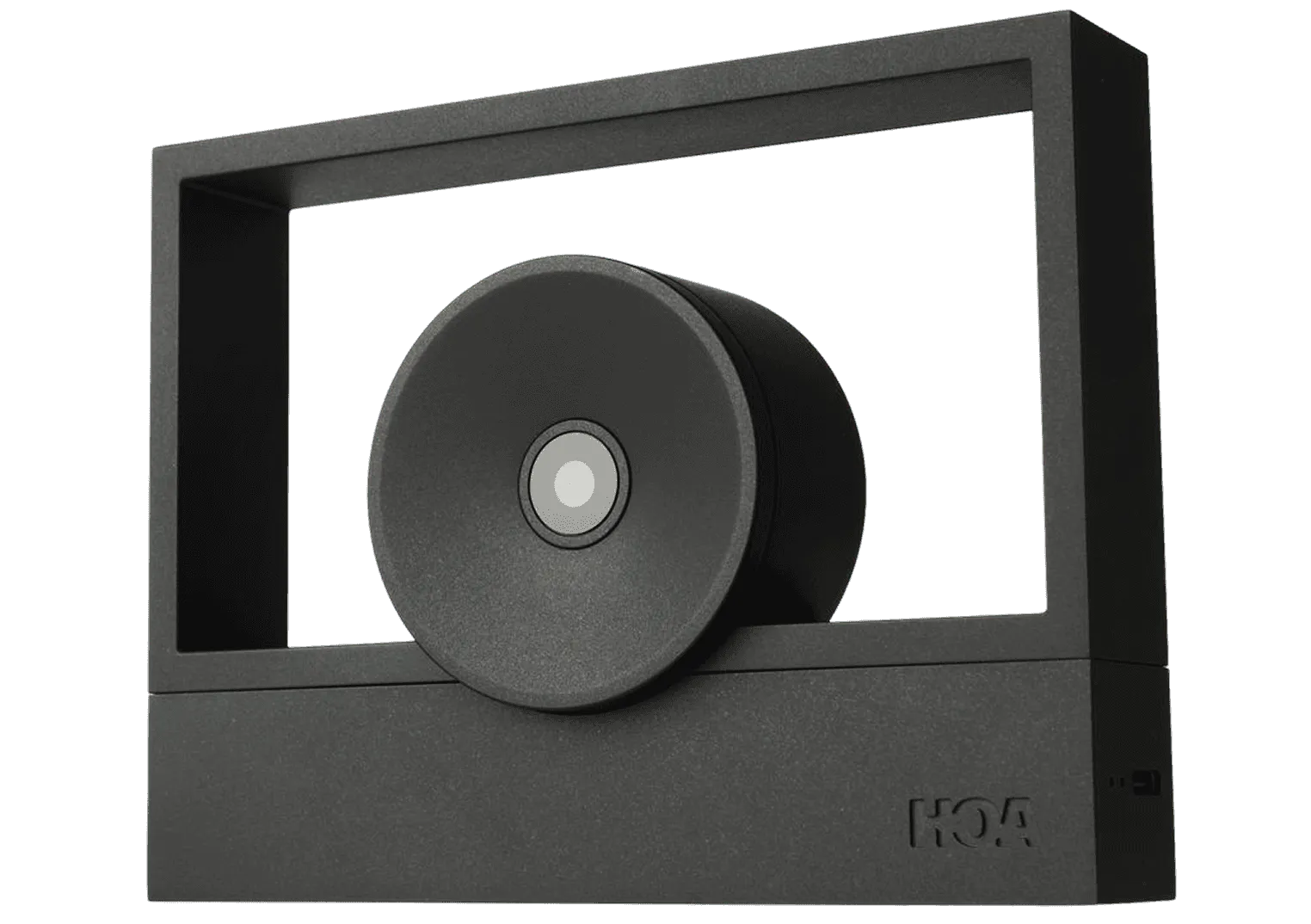
A South Korean startup has unveiled one of the odder cameras of the year. The HOA A1 has no rear screen, no electronic viewfinder and no playback on the body. What it has instead is a physical open frame that you look through, and a chip that signs each photo so that its origin can be checked later. The announcement came on 5 and 6 November, with coverage from Digital Camera World, Imaging Resource and TechEBlog.
A camera with no screen
The camera is made by Lutra Inc and branded HOA, short for Humans of Authenticity. Digital Camera World describes HOA as a spinoff of the enterprise AI company Lutra, a detail that appears only in that outlet. All three outlets agree on the design. A rectangular open frame on the body acts as the viewfinder, so you keep both eyes open and see the scene directly.
There is no on-camera review of shots. To view photos you tap a smartphone against the back of the camera, according to Imaging Resource and Digital Camera World. TechEBlog mentions a small rear display for battery and shot count, which conflicts with the screen-free description on the other outlets, so that detail is unconfirmed.
Specifications
The maker's page and the coverage give consistent figures. The sensor is a 16MP Sony IMX, 1/2.53 inch in size, with autofocus. The lens is a 26mm equivalent at f/1.75, with a focus range from 10cm to infinity. Image size is listed as 4656 by 3104 pixels, which works out to roughly 14.5 megapixels, a little below the 16MP sensor headline, so the output size is the number to trust. The body weighs 140g.
Battery life is quoted at up to 8 hours of standby and up to 90 minutes of continuous shooting.
Proof a photo is real
The selling point is a feature called ShootProof. A secure chip creates a digital fingerprint, or hash, of every photo and records it in a public registry. Imaging Resource and Digital Camera World describe the registry as blockchain based, while TechEBlog does not mention blockchain, so we cannot confirm that detail beyond those two outlets.
Photographers stay anonymous by default and can claim authorship afterwards. Capture works offline, but viewing and authenticating a photo needs an internet connection. An optional Signature Mode adds a hand-drawn signature to the corner of the image.
The idea responds to a real problem. As AI image generators improve, cameras that can prove a picture came from a real sensor at a real moment have a clear audience among photojournalists, collectors and anyone selling prints. Whether a registry run by a startup will earn trust is a separate question that the announcement does not answer.
Price and availability
The HOA A1 costs KRW 360,000, which the coverage converts to about US$289. The first run is called the HOA A1 First Edition and is capped at 100 numbered units, labelled 001 to 100, going on sale on 21 December. Number reservations are first come, first served. At the time of writing it cannot be bought or pre-ordered.
The maker has not announced global shipping or availability, and there is no India price or listing. We have not converted the price to rupees because no source provides a rupee figure.
What we do not know
The company has released no sample images, and Imaging Resource and TechEBlog both say colour and tone are still being tuned. Image quality is therefore an open question, and a small 1/2.53 inch sensor sets modest expectations in low light. Digital Camera World quotes the Lutra chief executive, Seon Jong-yeop, saying the company began "with deep learning even before AI gained" attention, a line translated from Korean.
There is also little detail on how long the registry will be maintained, or what happens to a photo's proof if the company closes. Those are fair questions for any buyer paying for authenticity that depends on a third party.
What to watch next
Watch for first sample photos and hands-on impressions closer to the 21 December sale, and for any word on wider production beyond the 100 numbered cameras. If the authentication system holds up, larger camera makers may feel pressure to offer something similar.
Published 8 November 2026. Gadgets365 will update this article as more information becomes available.
Editor
Pravin KankanePravin Kankane is the editor of Gadgets365, an independent technology publication based in Pune, India. He covers smartphones, AI, Apple, Android and consumer tech launches in India.