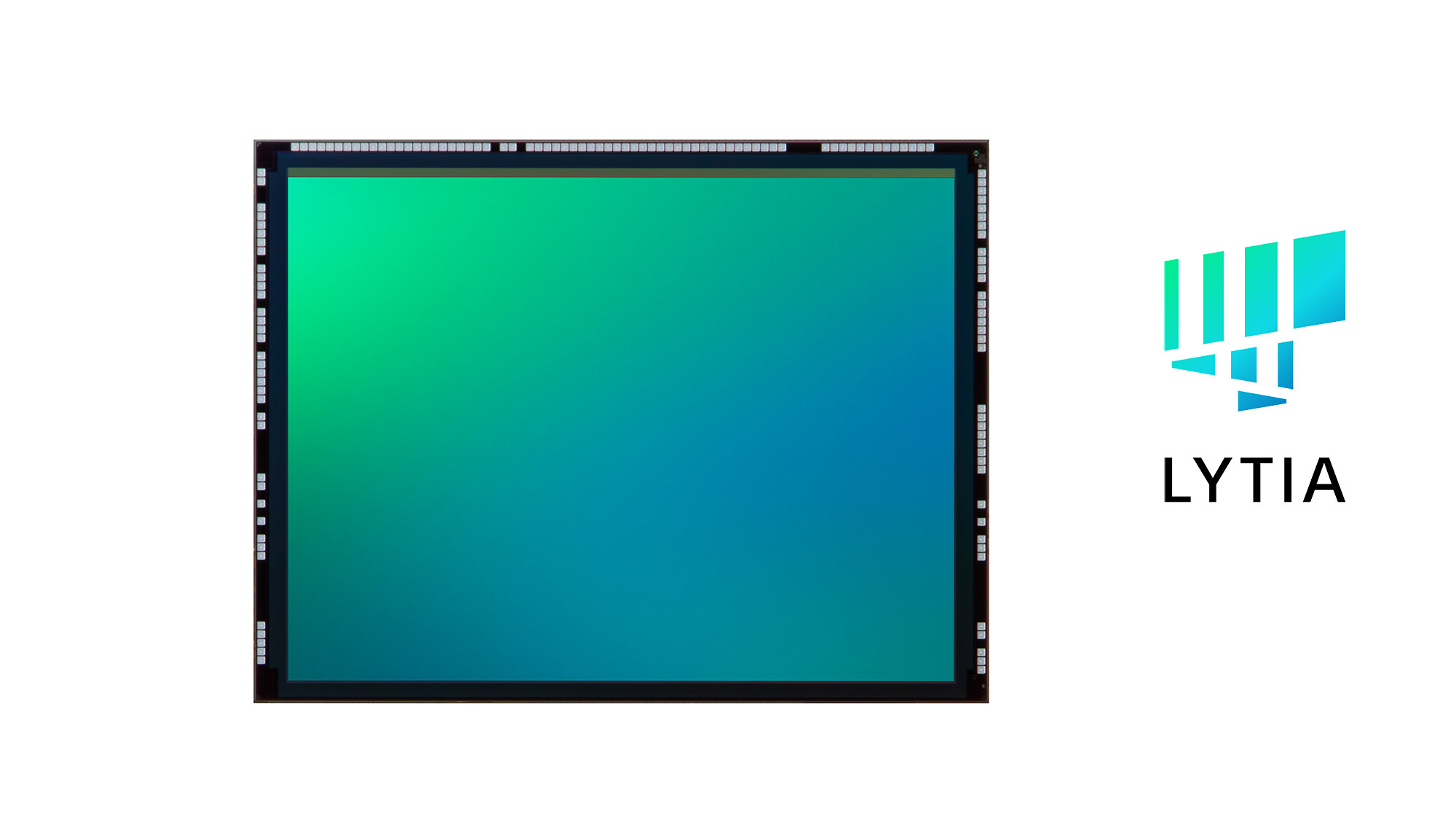
Sony Semiconductor Solutions has announced the LYTIA 720, a stacked CMOS image sensor designed for the main camera of smartphones. The company's release is dated October 28, 2026, and GSMArena reported the same specifications the same day. Mass-production shipments are planned for early November 2026.
What the sensor is
The LYTIA 720 is a 1/1.56-type sensor, with a 10.24 mm diagonal, and about 50 effective megapixels. Its pixels are 1.0 micrometres across, and it uses Quad Bayer Coding, which groups neighbouring pixels in fours so the sensor can trade resolution for light sensitivity. It sits in Sony's mobile LYTIA lineup, where it is listed with all-pixel autofocus as well as the company's LBMF autofocus technology.
The noise and HDR claims
The headline improvement is noise. Sony adds Ultra High Conversion Gain circuitry, which it says reduces random noise by about 50 percent compared with the LYTIA 700. GSMArena words the same claim as "up to" 50 percent, a reminder that the figure is a manufacturer's best-case number measured under Sony's conditions, not a result from independent testing.
For dynamic range, Sony combines Hybrid Frame-HDR with the new circuitry to reach 100 dB. The company says this is also the first LYTIA sensor of this size and pixel pitch capable of shooting 4K video at 60 frames per second with HDR and all-pixel autofocus. GSMArena describes the 4K 60fps HDR as single-frame HDR, a detail that does not appear in the summary of Sony's own release, so the exact HDR method for video should be treated as unclear.
Speeds at each resolution
Sony lists these frame rates with all-pixel autofocus:
| Mode | Frame rate |
|---|---|
| 50MP full resolution | 30 fps |
| 12.5MP | 90 fps, or 30 fps with DCG-HDR |
| 4K (16:9) | 120 fps, or 60 fps with DCG-HDR |
The sensor connects through MIPI C-PHY at up to 4.5 Gsps per trio on 2 or 3 trios, or D-PHY with 2 or 4 lanes at up to 2.5 Gbps per lane. Sony lists analog supply voltages of 2.8 and 1.8 V, a digital supply of 1.1 V and an interface supply of 1.8 or 1.2 V.

What is missing
Sony's release names no phone makers or models, gives no sample price and no sample shipment dates, so the sensor's first appearance is unknown. Past LYTIA parts have usually reached phones some months after a component announcement, but that is a general pattern, not something Sony has said about this part. Sony's own quote is modest: it says it aims to deliver high-quality imaging experiences to more users.
The 1/1.56-type size matters because it sits in the middle of the market. It is smaller than the 1-inch type sensors used in the most expensive camera phones, and larger than the typical budget main camera. A 1.0 micrometre pixel at 50MP is a common recipe for mid-range and upper-mid-range phones, which is where a noise and HDR improvement would be most visible.
For Indian buyers, this is a component announcement and not a product launch, so there is no India price or availability to report. Whether a phone sold here adopts it will depend on the handset makers, none of which has been named.
What to watch next
Watch for the first phone to list the LYTIA 720 in its specification sheet, which will show whether the 4K 60fps HDR video mode is exposed in the camera app. Independent testing of the noise reduction will be the real measure of Sony's 50 percent claim.
Published October 30, 2026. Gadgets365 will update this article as more information becomes available.