The first full reviews of Apple's touchscreen MacBook Pro landed on 5 November, a day before the laptops reached customers, and they agree on two things. The OLED display is the best Apple has made, and the touch input is useful but secondary to the keyboard and trackpad.
The display wins nearly every verdict
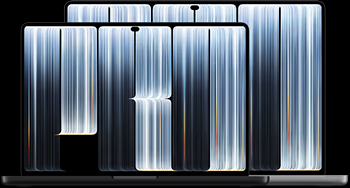
Apple's MacBook Pro with PROLED XDR Display uses a tandem OLED panel rated at up to 2,000 nits peak brightness and a 10,000,000:1 contrast ratio. Reviewers say the numbers hold up. Tom's Guide measured about 1,980 nits of HDR brightness on the 14-inch model and 1,949 on the 16-inch. Notebookcheck recorded 2,084 nits peak HDR on the 14-inch and about 600 nits in SDR, and gave the laptop 92 percent, calling it the best multimedia laptop available.
Tom's Hardware went further, describing it as the "best laptop screen I've ever seen". Both Tom's Guide and Tom's Hardware gave it their Editor's Choice badge.
Notebookcheck raised one caution that the other reviews skipped. It measured PWM flicker at 240 Hz with 56 percent amplitude at brightness settings of 99 percent and below, which it says could bother people who are sensitive to flicker.
Touch works, but nobody calls it essential
On touch, the verdicts are warm and restrained. Tom's Guide called it the most responsive touchscreen laptop its reviewer has used, with no noticeable lag, and compared pinch-to-zoom and swiping to an iPad Pro. TechRadar's Matt Hanson said it "works fine" but is not the reason to buy, noting that menus feel fiddly and that macOS is still built around a pointer.
Tom's Hardware found touch useful in iPad-style apps such as Overcast and the iPhone simulator, but no better than mouse and keyboard in Final Cut Pro or Cinema 4D. It also reported that the hinge still wobbles and does not lie flat. Several reviewers flagged the absence of Apple Pencil support and of Face ID.
Battery results differ by test
Apple claims up to 24 hours, based on its own September testing on a preproduction 16-inch M5 Pro. Independent results vary because each outlet uses its own method. TechRadar logged 24 hours 21 minutes on the 16-inch M5 Max in a looped 1080p video test at 50 percent brightness, compared with 21 hours 32 minutes for the M4 Pro 16-inch.
Tom's Guide's web-browsing test at 150 nits gave 16 hours 56 minutes on the 14-inch and 21 hours 24 minutes on the 16-inch. Tom's Hardware's similar test returned 15 hours 57 minutes on the 16-inch, trailing the mini-LED 14-inch M5 Max, which it put just under 18 hours. The practical reading is that battery life is excellent but not clearly better than the mini-LED models these replace.
Performance and the price
Performance is essentially unchanged. Tom's Guide noted that scores match the non-touch M5 Pro and M5 Max MacBook Pro models Apple released in March. Its Geekbench 6.7 multi-core results were 29,219 on the 14-inch and 30,327 on the 16-inch. Notebookcheck saw some throttling and louder fans under heavy load, and it criticised the 96 W power limit and charger.
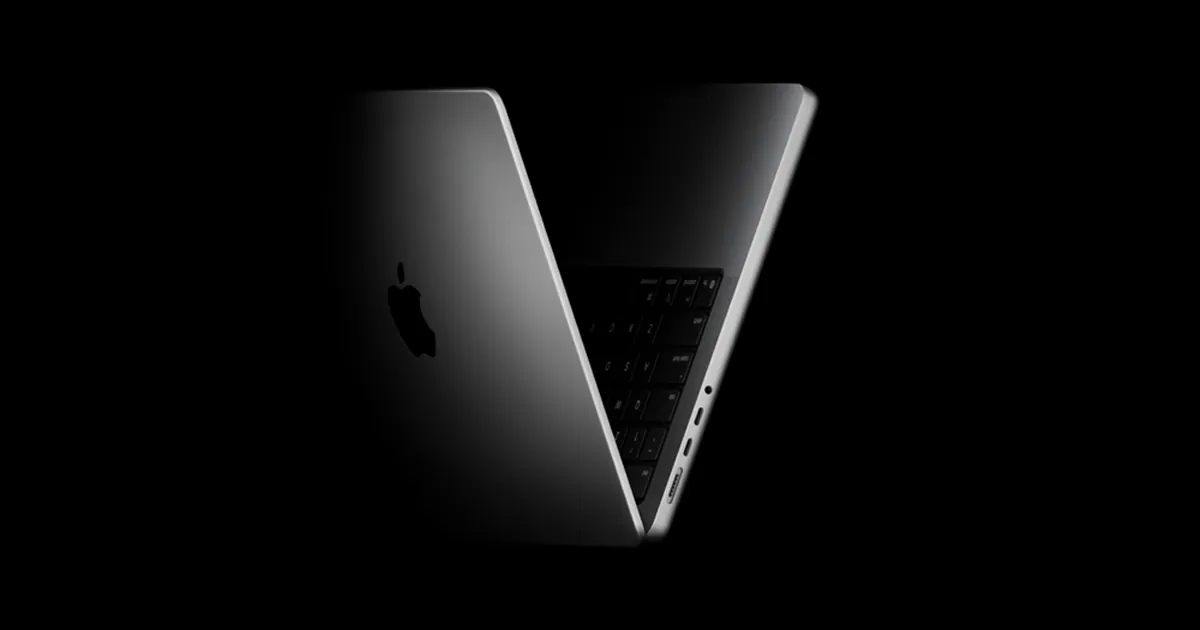
The new chassis is lighter. Apple lists 3 lb for the 14-inch and 4 lb for the 16-inch, and says the 16-inch is 0.7 lb lighter than before. Notebookcheck weighed the 14-inch at 1.379 kg.
In the US, prices start at $2,899 for the 14-inch with M5 Pro and $3,399 for the 16-inch, rising to $4,499 and $4,799 with M5 Max. Tom's Hardware pointed out that this is $400 more than mini-LED models with the same chips. TechRadar scored the 16-inch 4.5 out of 5, but suggested most buyers look at Apple's cheaper M6 MacBook Pro, which it lists at $1,999.
India pricing and availability
Apple India's product page showed a pre-order button but no prices when we checked. TelecomTalk and Techgenyz both report India pricing starting at Rs 3,49,900 for the 14-inch M5 Pro, and Techgenyz lists the 16-inch M5 Pro at Rs 4,09,900. Nano-texture glass adds Rs 18,000, per TelecomTalk. Pre-orders opened on 28 October. Techgenyz's report gives conflicting India delivery dates, 6 November and 9 November, so confirm the date Apple shows at checkout.
What to watch next
Tom's Guide said it had completed only one of its planned battery tests at publication, so its figures may change. Look for long-term reports on the hinge, flicker and fan noise now that units are in customers' hands, and for any macOS update that adds touch-specific controls.
Published 6 November 2026. Gadgets365 will update this article as more information becomes available.