Secretary S. Krishnan says the demand to run AI models is national and extends to the government itself, though no new inference subsidy has been announced.
· 4 min read
India's Ministry of Electronics and Information Technology is looking to expand the country's computing capacity for AI inference, the work of running trained models for users, according to remarks by Secretary S. Krishnan that The Hindu reported on November 27. He pointed to government computing being built in Pune and Bengaluru, but announced no new subsidy for companies.
What Krishnan said
Speaking to reporters on the sidelines of the Tec-Verse 2026 technology event in Chennai, Krishnan drew a line between training and inference. Computing support for the companies picked in the first round of the government's AI model programme was meant mainly for training, he said. Demand for inference is much wider, covering users across the country as well as the government's own internal needs.
The comment builds on what he told reporters in New Delhi earlier in the week, when ThePrint reported that he wanted the IndiaAI Mission to look beyond training.
"Now we need to shift towards how we can support inference," said S. Krishnan, MeitY Secretary.
He added at the time that the ministry would have to work out a scheme for it.
The facilities he named
According to The Hindu, Krishnan cited a facility that the Centre for Development of Advanced Computing, or C-DAC, is setting up in Pune with about 3,300 GPUs. He also referred to a high performance computing and AI facility coming up in Bengaluru, which he described as a "20 plus, now a 30 petaflop machine".
The newspaper separately reported that C-DAC procurement documents from November point to further growth. A tender seeks at least 3,000 AI accelerators for a new data centre at the organisation's Chikhali campus in Pune, along with 168 processors for its Innovation Park. The report does not set out how these figures overlap with the 3,300 GPU facility, so they should not be added together.
Krishnan also mentioned an agreement with Abu Dhabi technology group G42, saying that arrangement would be used primarily for inference. At the AI Impact Summit in February, G42 and chipmaker Cerebras announced plans for an 8 exaflop AI supercomputer in India. The Hindu's account does not say whether his remark referred to that specific system.
Who gets access first
The government's own requirements will have priority, followed by research institutions, innovators and academic institutions. Surplus capacity could later be offered to innovators for inference. Krishnan said the country broadly needs more overall compute so that more inference capacity is created.
On subsidies, the position is cautious. Existing support is intended for companies training their models, and the ministry will first assess whether enough capacity is being created domestically before considering further help. Direct investment or co-investment in companies could also be examined. MeitY is not selecting additional models for now. Its immediate priority is to help first-round companies speed up development and make their models commercially available.
Gadgets365 did not find an official ministry release setting out the Pune and Bengaluru figures, so they rest on The Hindu's reporting.
The Sarvam backdrop
The training and inference distinction has gained weight since Bengaluru startup Sarvam, which is supported under the roughly Rs 10,370 crore IndiaAI Mission, launched Token Factory on November 16. The platform offers open-weight models including DeepSeek, Kimi, GLM and Google's Gemma alongside Sarvam's own, running on infrastructure in India, and its sale of access to Chinese models drew criticism.
Sarvam has said Token Factory runs on GPUs it bought without government support and that its subsidised compute under the mission ended in March 2026. Krishnan told reporters the ministry saw no misuse of its support, ThePrint reported, and said it continues to back the company's work towards a 1 trillion parameter model. Sarvam's assistant is also reaching low-cost hardware through the HMD Rise, which launched at Rs 9,999 with Indus built in.
Compute already in the pipeline
The government has been adding to its order book. In early October, Krishnan said fresh requests for proposals covered 3,000 GPUs of capacity and a further 10,000 GPUs intended for government use, Storyboard18 reported. C-DAC has also been seeking to empanel providers for up to 10,000 AI compute units to serve ministries, researchers, startups and industry.
Chip supply is the other variable. Krishnan said the latest US export controls were aimed mainly at China and had no significant effect on India. ThePrint noted that the rules do require a licence for data centres anywhere, India included, that use US chips above a set computing threshold to serve companies based in China or Macau. We covered the wider impact in our report on the reported Nvidia server halt and the new US rule.
What to watch next
The key question is whether MeitY turns its inference comments into a funded scheme with prices and eligibility rules. In the nearer term, Careerindia reported that bids for the 10,000 unit empanelment are due on November 30 after an extension. Krishnan has also said the ministry's AI regulation paper will be released shortly, and that new research guidelines are almost ready.
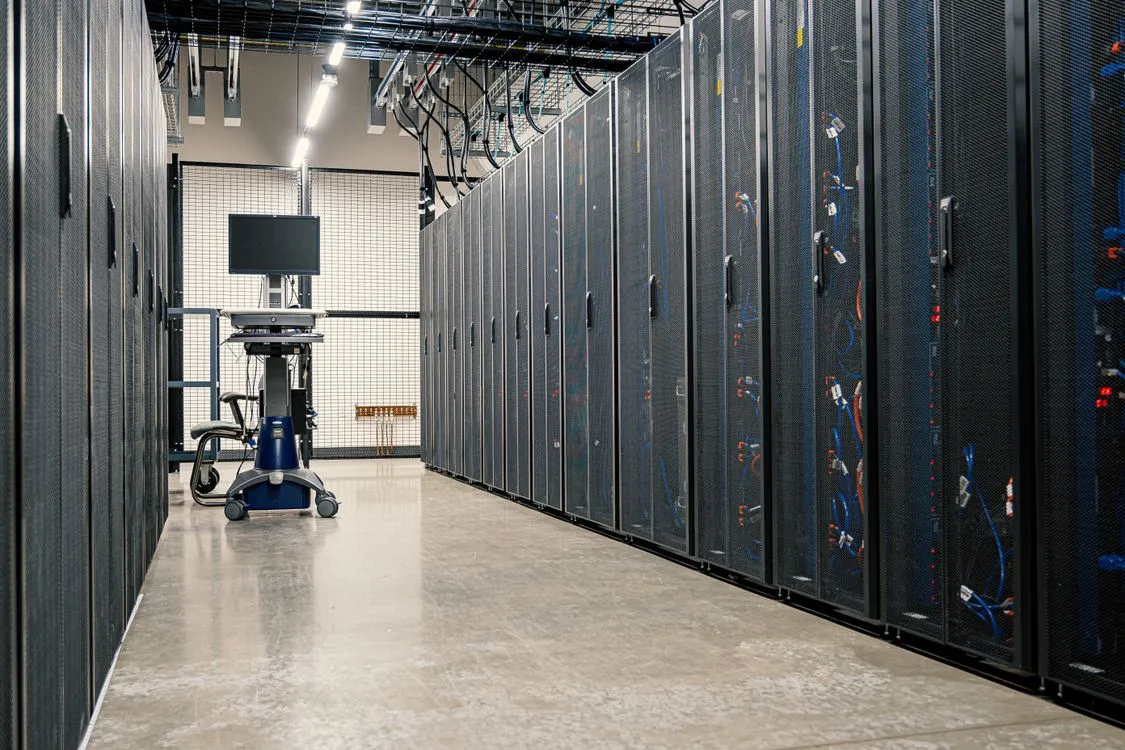
Cover photo: Pexels. Illustrative image of data centre server cabinets, not a C-DAC facility.
Published November 28, 2026. Gadgets365 will update this article as more information becomes available.
Editor
Pravin KankanePravin Kankane is the editor of Gadgets365, an independent technology publication based in Pune, India. He covers smartphones, AI, Apple, Android and consumer tech launches in India.