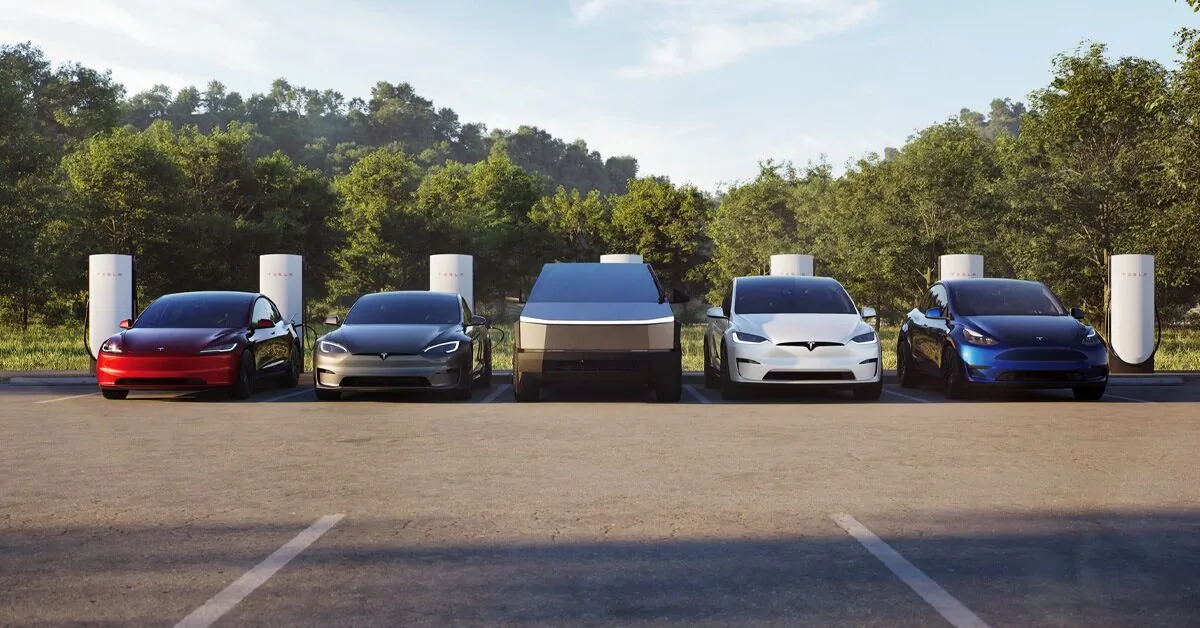
Musk Says Spotting Pets at Night Is Why Tesla's Robotaxis Stop at 11pm
Elon Musk's explanation for Tesla's limited robotaxi hours points to a weakness that lidar and radar are designed to cover, the very sensors Tesla has refused to use.
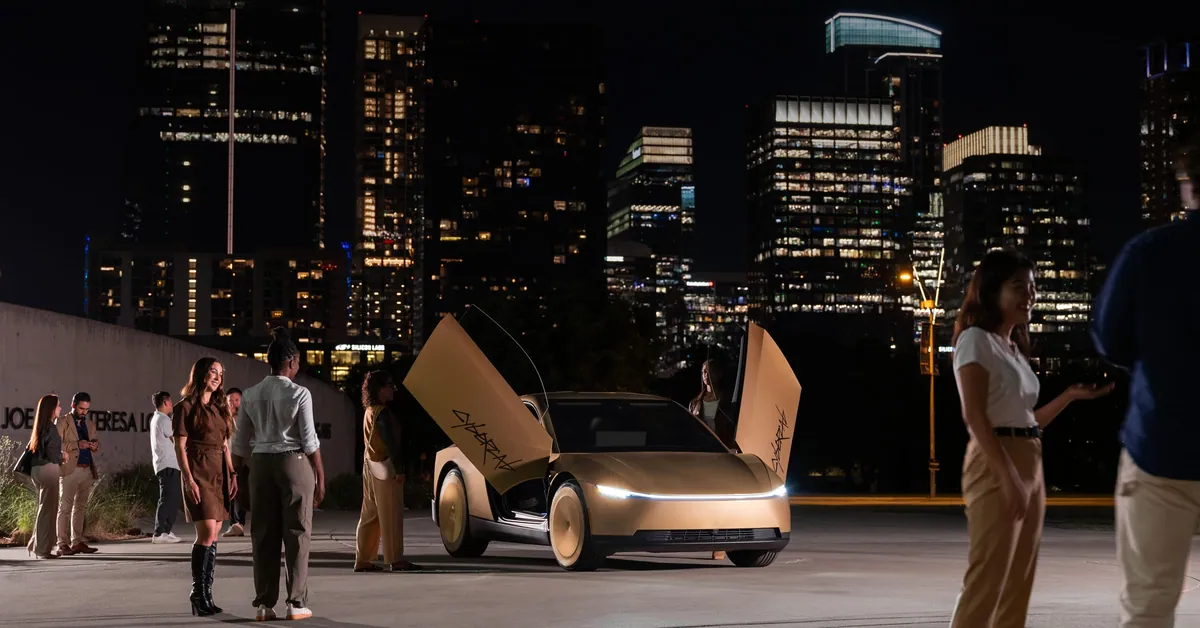
Elon Musk has given the clearest explanation yet for why Tesla's robotaxi service shuts down in the late evening: its camera-only system has trouble seeing pets on dark roads. He posted it on X on October 3, as Tesla extended its Austin hours by one hour to 11pm (Electrek via Electric Vehicles, Not a Tesla App).
What Musk said
Musk wrote that the main challenge is making sure Tesla does not "run over pets when they're hard to see at night," and described the hardest case as "grey kittens on grey tarmac in the dark," as reported by The Next Web and Benzinga. He also argued that "visual spectrum cameras can see very well in the dark when AI is doing the photon count analysis." The point is contrast: a small, dark animal on a dark road gives a camera very little to work with.
Musk gave no date for round-the-clock service and did not say what Tesla is changing. No pet collision involving the service has been reported.
What the service hours look like
| Period | Robotaxi service hours |
|---|---|
| Launch, June 2025 (Austin) | 6am to midnight |
| From August (Austin, Dallas, Houston, Miami, Orlando, Tampa) | Scaled back to close at 10pm |
| From October 3 (Austin) | Extended to 11pm |
The same update added 111 Cybercabs to the Austin fleet, according to Not a Tesla App. Hours in the other cities were not reported as changing.
The lidar contradiction
The explanation sits awkwardly with Tesla's long-standing stance on sensors. Electrek notes that Musk called lidar "a fool's errand" in April 2019 and said in August 2025 that it reduces safety because of sensor contention. Tesla removed radar from its cars in 2021 and has never shipped a vehicle with lidar.
The problem Musk describes is the kind lidar and radar handle naturally, because both measure distance with their own signals and do not depend on ambient light or contrast. Electrek and The Next Web both make this point, and neither suggests Tesla is changing course. One report notes that NHTSA is investigating Tesla's camera system over hazard detection in reduced visibility.
How Waymo compares
The Next Web contrasts Tesla with Waymo, which it says uses 13 cameras, four lidars and six radars on its vehicles and operates around the clock with roughly 4,000 driverless vehicles. Night driving is not a niche condition: a service that stops at 11pm cannot cover late-night trips, airport runs or bar-closing demand, among the busiest periods for conventional ride-hailing.
The European vote
The Next Web reported that the EU's Technical Committee on Motor Vehicles was scheduled to vote on October 6 on bloc-wide approval of Tesla's supervised driver assistance software, with approval needing 55 percent of member states representing 65 percent of the EU population. That vote has since been pushed to December at the earliest (AutoGuide), and Tesla has renamed the software "Tesla Assisted Driving" in Europe.
What this means for riders
Tesla's robotaxi is a daytime and evening service for now, and the company itself says nights are a problem it has not solved. Tesla's robotaxi service does not operate in India.
What to watch next
Watch whether Tesla extends hours again or adds overnight service, any change in its position on radar or lidar, the outcome of the NHTSA investigation, and the delayed EU vote.
'/%3E%3Cstop offset='1' stop-color='rgb(24,34,52)'/%3E%3C/linearGradient%3E%3C/defs%3E%3Crect width='1200' height='675' fill='url(%23g)'/%3E%3Crect x='0' y='520' width='1200' height='155' fill='rgb(30,34,42)'/%3E%3Crect x='80' y='590' width='140' height='10' fill='rgb(200,205,215)'/%3E%3Crect x='330' y='590' width='140' height='10' fill='rgb(200,205,215)'/%3E%3Crect x='730' y='590' width='140' height='10' fill='rgb(200,205,215)'/%3E%3Crect x='980' y='590' width='140' height='10' fill='rgb(200,205,215)'/%3E%3Cpath d='M360 470L420 350Q440 320 480 320H720Q760 320 780 350L840 470Z' fill='rgb(52,60,76)'/%3E%3Crect x='330' y='440' width='540' height='90' rx='30' fill='rgb(64,74,92)'/%3E%3Ccircle cx='450' cy='535' r='42' fill='rgb(14,18,26)'/%3E%3Ccircle cx='750' cy='535' r='42' fill='rgb(14,18,26)'/%3E%3Crect x='470' y='296' width='260' height='14' rx='7' fill='rgb(40,230,230)'/%3E%3Crect x='338' y='456' width='22' height='10' rx='5' fill='rgb(40,230,230)'/%3E%3Crect x='840' y='456' width='22' height='10' rx='5' fill='rgb(40,230,230)'/%3E%3Cpath d='M470 296L330 120M730 296L870 120' stroke='rgb(40,230,230)' stroke-width='3' opacity='.25'/%3E%3C/svg%3E)
'/%3E%3Cstop offset='1' stop-color='rgb(28,60,84)'/%3E%3C/linearGradient%3E%3C/defs%3E%3Crect width='1200' height='675' fill='url(%23v)'/%3E%3Crect x='250' y='260' width='520' height='230' rx='30' fill='none' stroke='rgb(140,210,255)' stroke-width='12'/%3E%3Crect x='770' y='340' width='40' height='70' rx='10' fill='rgb(140,210,255)'/%3E%3Crect x='290' y='300' width='110' height='150' rx='10' fill='rgb(255,190,90)'/%3E%3Crect x='420' y='340' width='110' height='110' rx='10' fill='rgb(255,190,90)' opacity='.8'/%3E%3Crect x='550' y='390' width='110' height='60' rx='10' fill='rgb(255,190,90)' opacity='.6'/%3E%3Cpath d='M900 190L960 280L1020 190M960 280V120' fill='none' stroke='rgb(255,120,110)' stroke-width='12' stroke-linecap='round' stroke-linejoin='round'/%3E%3Cpath d='M900 520H1040' stroke='rgb(140,210,255)' stroke-width='8' stroke-linecap='round'/%3E%3C/svg%3E)
'/%3E%3Cstop offset='1' stop-color='rgb(14,18,30)'/%3E%3C/linearGradient%3E%3C/defs%3E%3Crect width='1200' height='675' fill='url(%23e)'/%3E%3Crect y='500' width='1200' height='175' fill='rgb(26,30,42)'/%3E%3Cellipse cx='520' cy='520' rx='330' ry='20' fill='rgb(0,0,0)' opacity='.35'/%3E%3Cpath d='M210 470C210 410 250 380 320 370L420 300C450 280 480 272 520 272H640C690 272 730 292 770 340L820 372C850 380 860 400 860 440V470Z' fill='rgb(70,150,255)'/%3E%3Cpath d='M440 312H520V365H380ZM545 312H640C670 312 695 325 725 365H545Z' fill='rgb(200,225,255)' opacity='.75'/%3E%3Ccircle cx='350' cy='475' r='52' fill='rgb(10,12,20)'/%3E%3Ccircle cx='350' cy='475' r='26' fill='rgb(150,160,185)'/%3E%3Ccircle cx='720' cy='475' r='52' fill='rgb(10,12,20)'/%3E%3Ccircle cx='720' cy='475' r='26' fill='rgb(150,160,185)'/%3E%3Cg transform='translate(960 240)'%3E%3Crect x='-50' y='0' width='100' height='200' rx='14' fill='rgb(60,70,95)'/%3E%3Crect x='-30' y='24' width='60' height='46' rx='8' fill='rgb(120,235,170)'/%3E%3Cpath d='M-50 150C-120 150 -140 190 -190 230' fill='none' stroke='rgb(150,160,185)' stroke-width='10' stroke-linecap='round'/%3E%3Crect x='-215' y='215' width='46' height='34' rx='8' fill='rgb(150,160,185)'/%3E%3C/g%3E%3C/svg%3E)