Tesla Renames Full Self-Driving to "Tesla Assisted Driving" in Europe to Win EU Approval
The software is unchanged and still needs a supervising driver. Germany backs a faster EU decision if the name goes and speeding is capped at 10 percent, but a vote has slipped to December.
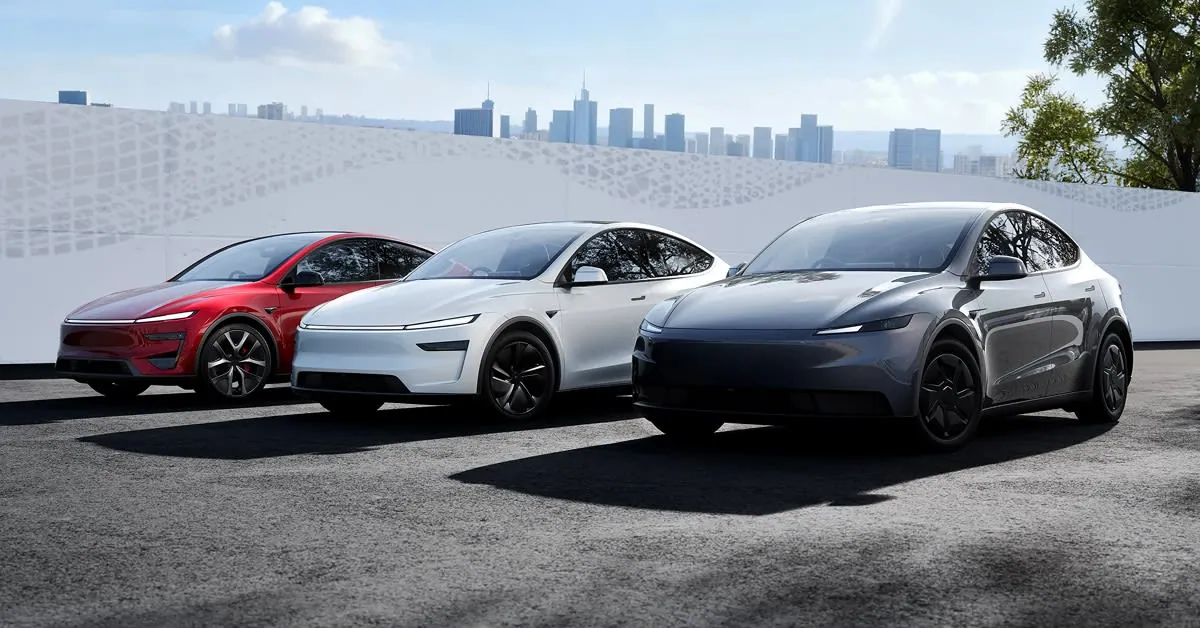
Tesla has started calling its driver-assistance software "Tesla Assisted Driving" on its European websites, dropping the "Full Self-Driving" name that regulators said could mislead drivers. The change, reported by Reuters on October 9, leaves the software unchanged and does not guarantee approval across the European Union (The Next Web, TechCrunch).
What changed on the websites
The new name is live on Tesla's sites in Germany, Spain, the Netherlands and Slovakia, according to Reuters, and TechStartups reports that old Full Self-Driving pages redirect to the Tesla Assisted Driving information. In the United States, Tesla still sells the software as "Full Self-Driving (Supervised)" (Let's Data Science). The system can steer, brake and accelerate, but a driver must watch the road at all times and remains legally responsible.
The move follows an announcement from Germany's transport ministry on Tuesday, October 6, that Tesla had offered to adopt the new branding. Transport minister Steffen Bilger said he wants Tesla drivers to get the benefits of assisted driving across the whole EU as quickly as possible, and that the new name addresses the ministry's concern that the old one was misleading (electrive).
The speed condition
The rename was not Germany's only demand. After a September meeting between Bilger and Tesla, both sides agreed the system may exceed the posted speed limit by no more than 10 percent, and Germany will argue for that position in Brussels, The Next Web reports. NotATeslaApp says Tesla's current Speed Offset feature can go up to 50 percent over the limit in some conditions, and that Tesla would likely need to remove it or cap it at 10 percent to win approval. Reuters has reported that the Dutch-approved European version can exceed the detected limit by up to 50 percent, and safety advocates and some regulators want that removed before approval.
Germany has not yet approved the software for its own roads, and has not yet recognised the Dutch approval granted in April. Bilger said an EU-level deal made sense, but that Germany would consider acting alone if one failed.
Where approval stands
Approval is happening country by country. NotATeslaApp and Drive Tesla Canada list eight EU countries that have authorised the system so far.
| Status | Countries |
|---|---|
| Approved | Netherlands, Belgium, Denmark, Lithuania, Estonia, Slovenia, Czechia, Croatia |
| Expected next | Slovakia (per TechStartups) |
| In talks or nearing a decision | Ireland, Italy (per NotATeslaApp) |
| Further testing | France |
| Opposed | Sweden, which has urged the EU to reject the software over speeding |
A member-state vote that was due in October has been pushed to December at the earliest, and it needs a qualified majority of at least 15 countries (AutoGuide). Sweden's consumer authorities have also asked the national transport regulator to examine whether the advertising could falsely suggest fully autonomous driving.
Regulators on the name
Reuters obtained internal Italian correspondence in which officials warned that the name could lead users to believe the car has unsupervised automated driving functions, particularly at the level known as SAE Level 3. Level 3 systems can drive without constant supervision under defined conditions, which supervised Full Self-Driving does not do. NotATeslaApp also reports that Tesla Assisted Driving is the expected name for the software in China, based on Tesla's Chinese owner's manuals.
Why Tesla wants this
Tesla describes European approval as key to restoring its sales in the region, where it is trying to win back market share from Chinese electric-vehicle makers, according to Reuters coverage carried by The Star. Its first European factory is near Berlin. The Next Web notes that BYD outsold Tesla in Europe in the first months of 2026. TechStartups reports that Tesla has urged owners and supporters to contact national regulators and ask for faster decisions.
The safety case remains disputed. Seven traffic-safety researchers told Reuters that Tesla's European safety research does not examine crash rates or traffic deaths, so it cannot support the company's safety claims. The Next Web adds that the renamed German page is largely a translation of the US page and repeats a safety claim that independent researchers have disputed.
What to watch next
Watch for Slovakia's formal approval and for decisions in Ireland and Italy. Watch whether Tesla changes the 50 percent speed offset in its European software before the December vote, and for any move by Sweden or France that could make the qualified majority harder to reach.
'/%3E%3Cstop offset='1' stop-color='rgb(24,34,52)'/%3E%3C/linearGradient%3E%3C/defs%3E%3Crect width='1200' height='675' fill='url(%23g)'/%3E%3Crect x='0' y='520' width='1200' height='155' fill='rgb(30,34,42)'/%3E%3Crect x='80' y='590' width='140' height='10' fill='rgb(200,205,215)'/%3E%3Crect x='330' y='590' width='140' height='10' fill='rgb(200,205,215)'/%3E%3Crect x='730' y='590' width='140' height='10' fill='rgb(200,205,215)'/%3E%3Crect x='980' y='590' width='140' height='10' fill='rgb(200,205,215)'/%3E%3Cpath d='M360 470L420 350Q440 320 480 320H720Q760 320 780 350L840 470Z' fill='rgb(52,60,76)'/%3E%3Crect x='330' y='440' width='540' height='90' rx='30' fill='rgb(64,74,92)'/%3E%3Ccircle cx='450' cy='535' r='42' fill='rgb(14,18,26)'/%3E%3Ccircle cx='750' cy='535' r='42' fill='rgb(14,18,26)'/%3E%3Crect x='470' y='296' width='260' height='14' rx='7' fill='rgb(40,230,230)'/%3E%3Crect x='338' y='456' width='22' height='10' rx='5' fill='rgb(40,230,230)'/%3E%3Crect x='840' y='456' width='22' height='10' rx='5' fill='rgb(40,230,230)'/%3E%3Cpath d='M470 296L330 120M730 296L870 120' stroke='rgb(40,230,230)' stroke-width='3' opacity='.25'/%3E%3C/svg%3E)
'/%3E%3Cstop offset='1' stop-color='rgb(28,60,84)'/%3E%3C/linearGradient%3E%3C/defs%3E%3Crect width='1200' height='675' fill='url(%23v)'/%3E%3Crect x='250' y='260' width='520' height='230' rx='30' fill='none' stroke='rgb(140,210,255)' stroke-width='12'/%3E%3Crect x='770' y='340' width='40' height='70' rx='10' fill='rgb(140,210,255)'/%3E%3Crect x='290' y='300' width='110' height='150' rx='10' fill='rgb(255,190,90)'/%3E%3Crect x='420' y='340' width='110' height='110' rx='10' fill='rgb(255,190,90)' opacity='.8'/%3E%3Crect x='550' y='390' width='110' height='60' rx='10' fill='rgb(255,190,90)' opacity='.6'/%3E%3Cpath d='M900 190L960 280L1020 190M960 280V120' fill='none' stroke='rgb(255,120,110)' stroke-width='12' stroke-linecap='round' stroke-linejoin='round'/%3E%3Cpath d='M900 520H1040' stroke='rgb(140,210,255)' stroke-width='8' stroke-linecap='round'/%3E%3C/svg%3E)
'/%3E%3Cstop offset='1' stop-color='rgb(14,18,30)'/%3E%3C/linearGradient%3E%3C/defs%3E%3Crect width='1200' height='675' fill='url(%23e)'/%3E%3Crect y='500' width='1200' height='175' fill='rgb(26,30,42)'/%3E%3Cellipse cx='520' cy='520' rx='330' ry='20' fill='rgb(0,0,0)' opacity='.35'/%3E%3Cpath d='M210 470C210 410 250 380 320 370L420 300C450 280 480 272 520 272H640C690 272 730 292 770 340L820 372C850 380 860 400 860 440V470Z' fill='rgb(70,150,255)'/%3E%3Cpath d='M440 312H520V365H380ZM545 312H640C670 312 695 325 725 365H545Z' fill='rgb(200,225,255)' opacity='.75'/%3E%3Ccircle cx='350' cy='475' r='52' fill='rgb(10,12,20)'/%3E%3Ccircle cx='350' cy='475' r='26' fill='rgb(150,160,185)'/%3E%3Ccircle cx='720' cy='475' r='52' fill='rgb(10,12,20)'/%3E%3Ccircle cx='720' cy='475' r='26' fill='rgb(150,160,185)'/%3E%3Cg transform='translate(960 240)'%3E%3Crect x='-50' y='0' width='100' height='200' rx='14' fill='rgb(60,70,95)'/%3E%3Crect x='-30' y='24' width='60' height='46' rx='8' fill='rgb(120,235,170)'/%3E%3Cpath d='M-50 150C-120 150 -140 190 -190 230' fill='none' stroke='rgb(150,160,185)' stroke-width='10' stroke-linecap='round'/%3E%3Crect x='-215' y='215' width='46' height='34' rx='8' fill='rgb(150,160,185)'/%3E%3C/g%3E%3C/svg%3E)