Nvidia's Jensen Huang Expects Chip Sales to Double Next Year, Beyond Its Own Guidance
Speaking at King Charles III's AI summit at Dumfries House on September 17, Huang projected twice the unit volume, while formal guidance targets 70% revenue growth.
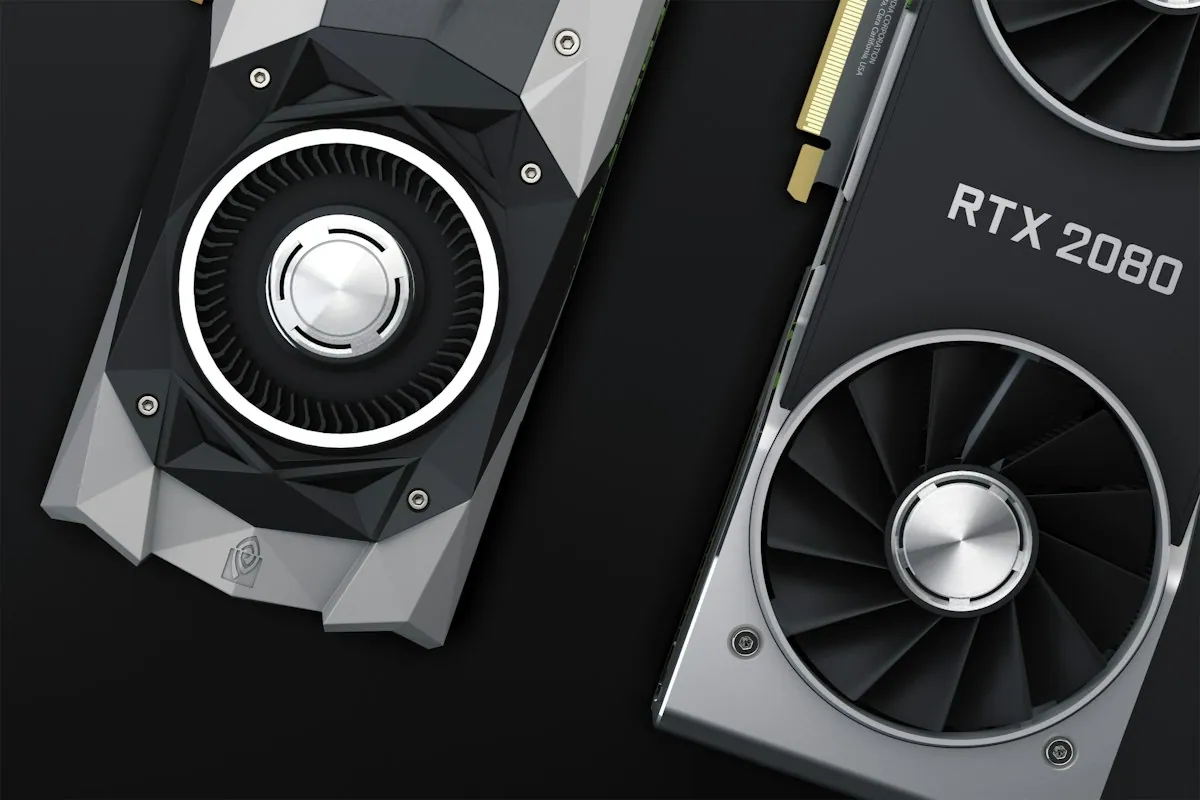
Nvidia CEO Jensen Huang said on September 17 that the company expects to sell twice as many chips next year as it does this year. He spoke to reporters at an AI summit hosted by King Charles III at Dumfries House in Ayrshire, Scotland, and the projection goes further than Nvidia's own financial guidance (Bloomberg Government, Eastern Herald).
A bigger number than Nvidia's guidance
Nvidia's formal outlook, given in August, calls for 70% revenue growth in the fiscal year ending January 2028, to about $673 billion. Finance chief Colette Kress said growth could be double that if supply constraints eased. Huang framed a doubling of unit volume as his expectation, crediting AI's spread across industries and economies "in almost every single country that we're in" (Digital Today). Some analysis notes the doubling still depends on what supply allows.
| Figure | Value |
|---|---|
| Revenue, quarter ending July 26, 2026 | $96.2 billion (more than double a year earlier) |
| Guidance, current quarter | $108 billion |
| Formal FY2028 outlook (year ending January 2028) | About 70% revenue growth, to about $673 billion |
| Huang's projection | Twice as many chips sold next year |
| Blackwell GPUs shipped (Huang, last year) | 6 million over four quarters |
Units and revenue are different measures. Doubling the number of chips shipped implies manufacturing capacity that does not fully exist yet, which raises the question of who gets priority on a supply chain already stretched across cloud providers, sovereign AI projects and enterprise buyers.
Chips beyond the obvious GPUs
Nvidia does not disclose total chip sales, and its lineup goes well beyond the Blackwell and Rubin data centre GPUs. It also makes CPUs, networking and switch chips, optical networking components, laptop chips, Jetson chips for robotics and autonomous vehicles, and the chip inside Nintendo's Switch 2.
Safety on the same stage
The summit, convened by the King's Foundation and the Sustainable Markets Initiative, was meant to press AI leaders on safety and accountability. Attendees included OpenAI CFO Sarah Friar, Google DeepMind co-founder Demis Hassabis and Anthropic's public affairs chief Tino Cuellar. Huang said unsafe products should be held back while engineering continues: "When a product is not safe, we should hold it back and keep engineering it." He presented safety as an engineering problem to solve through iteration rather than a reason to slow deployment broadly.
Why it matters beyond data centres
Advanced foundry capacity is finite and shared with Apple, Samsung and Qualcomm's consumer chips. As Nvidia's demand for TSMC's leading-edge capacity grows, competition for the same production slots and materials can feed into component costs and availability for consumer electronics, a pattern already seen this year in memory shortages and reported price increases from companies including AMD.
No India-specific figures or allocations were given in Huang's remarks.
What to watch next
Watch whether shipment volumes over the next few quarters close the gap between Huang's doubling target and Nvidia's formal guidance, the clearest sign of whether the projection reflects real visibility into new capacity.
'/%3E%3Cstop offset='1' stop-color='rgb(34,52,84)'/%3E%3C/linearGradient%3E%3C/defs%3E%3Crect width='1200' height='675' fill='url(%23g)'/%3E%3Cg fill='rgb(110,200,255)'%3E%3Crect x='120' y='440' width='56' height='110' rx='6'/%3E%3Crect x='196' y='405' width='56' height='145' rx='6'/%3E%3Crect x='272' y='360' width='56' height='190' rx='6'/%3E%3Crect x='348' y='315' width='56' height='235' rx='6'/%3E%3Crect x='424' y='255' width='56' height='295' rx='6'/%3E%3Crect x='500' y='195' width='56' height='355' rx='6'/%3E%3C/g%3E%3Cg fill='rgb(140,150,175)'%3E%3Crect x='680' y='470' width='56' height='80' rx='6'/%3E%3Crect x='756' y='466' width='56' height='84' rx='6'/%3E%3Crect x='832' y='472' width='56' height='78' rx='6'/%3E%3Crect x='908' y='468' width='56' height='82' rx='6'/%3E%3Crect x='984' y='465' width='56' height='85' rx='6'/%3E%3Crect x='1060' y='470' width='56' height='80' rx='6'/%3E%3C/g%3E%3Crect x='100' y='556' width='1036' height='6' rx='3' fill='rgb(220,230,245)'/%3E%3Ccircle cx='620' cy='200' r='16' fill='rgb(255,200,90)'/%3E%3C/svg%3E)

'/%3E%3Cstop offset='1' stop-color='rgb(70,40,90)'/%3E%3C/linearGradient%3E%3C/defs%3E%3Crect width='1200' height='675' fill='url(%23g)'/%3E%3Cg stroke='rgb(240,200,120)' stroke-width='10' stroke-linecap='round' fill='none'%3E%3Cpath d='M600 150V540M480 540H720M360 220H840'/%3E%3Cpath d='M360 220L290 360H430ZM840 220L770 360H910Z'/%3E%3C/g%3E%3Ccircle cx='600' cy='140' r='18' fill='rgb(240,200,120)'/%3E%3Cpath d='M290 360A70 40 0 0 0 430 360ZM770 360A70 40 0 0 0 910 360Z' fill='rgb(240,200,120)'/%3E%3C/svg%3E)
'/%3E%3Cstop offset='1' stop-color='rgb(22,84,90)'/%3E%3C/linearGradient%3E%3C/defs%3E%3Crect width='1200' height='675' fill='url(%23a)'/%3E%3Cg fill='rgb(120,230,210)'%3E%3Crect x='230' y='420' width='110' height='140' rx='10' opacity='.45'/%3E%3Crect x='390' y='350' width='110' height='210' rx='10' opacity='.6'/%3E%3Crect x='550' y='270' width='110' height='290' rx='10' opacity='.75'/%3E%3Crect x='710' y='170' width='110' height='390' rx='10'/%3E%3C/g%3E%3Cg fill='none' stroke='rgb(255,215,120)' stroke-width='6' stroke-linecap='round'%3E%3Cpath d='M240 400L400 330 560 250 765 140'/%3E%3C/g%3E%3Cg fill='rgb(255,215,120)'%3E%3Ccircle cx='240' cy='400' r='14'/%3E%3Ccircle cx='400' cy='330' r='14'/%3E%3Ccircle cx='560' cy='250' r='14'/%3E%3Ccircle cx='765' cy='140' r='14'/%3E%3C/g%3E%3Cg fill='none' stroke='rgb(120,230,210)' stroke-opacity='.5' stroke-width='4'%3E%3Ccircle cx='980' cy='230' r='70'/%3E%3Ccircle cx='980' cy='230' r='120'/%3E%3C/g%3E%3Crect x='180' y='575' width='700' height='6' rx='3' fill='rgb(120,230,210)' opacity='.6'/%3E%3C/svg%3E)