Nvidia Pledges $250 Million of Computing Power to UK AI Safety Research Over Five Years
The pledge is compute, not cash, about $50 million a year through UK cloud partners. Oxford, UCL and Imperial are named, but provider and commercial terms are still to be agreed.
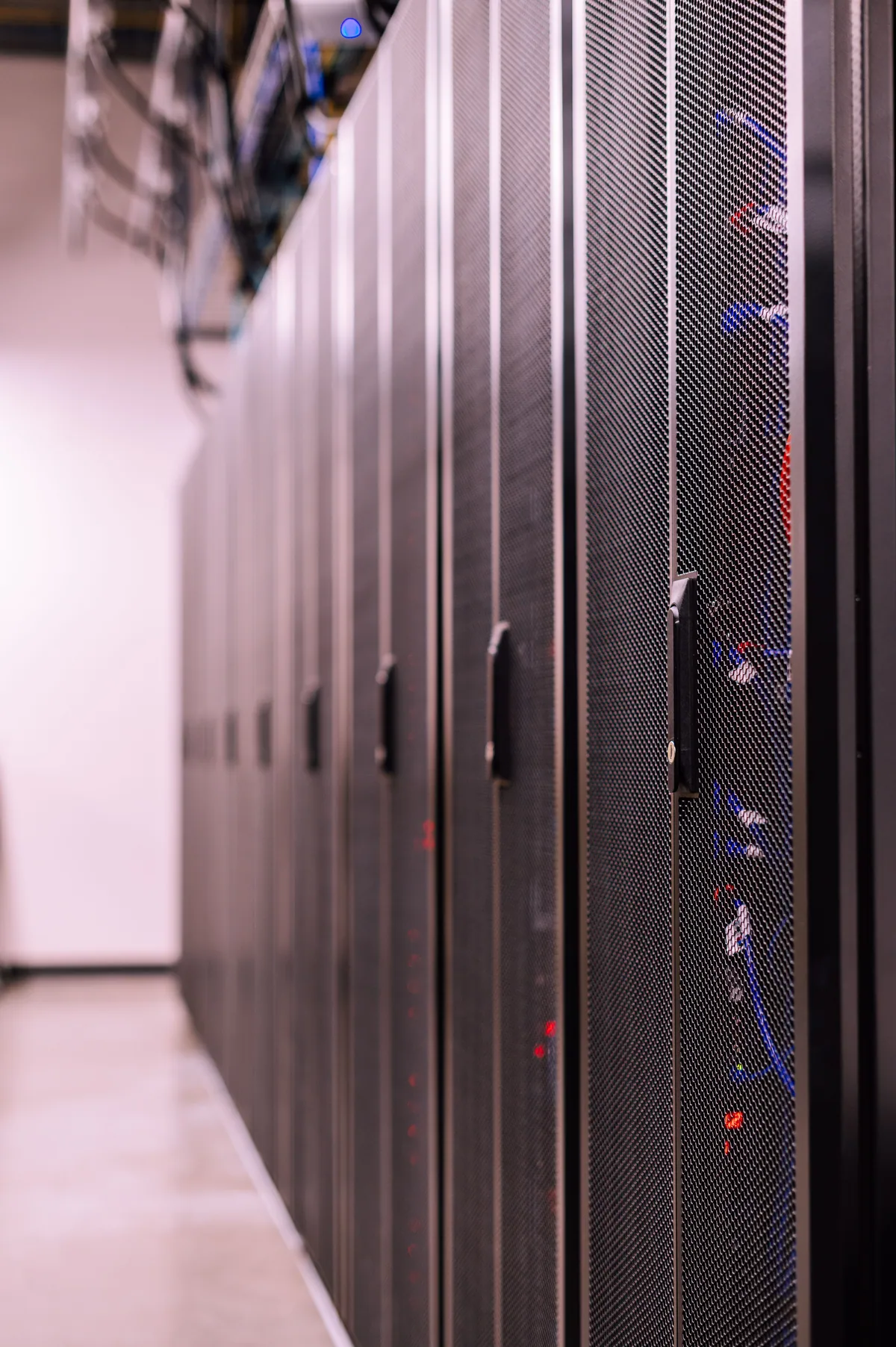
Nvidia will donate $250 million of computing power to British AI safety and security research over five years, the company announced this week. The pledge works out to about $50 million of compute access a year, and it is compute, not cash (Nvidia newsroom, The Daily Star).
How the commitment works
Nvidia will fund access to computing through UK-based Nvidia Cloud Partners, with the infrastructure hosted in Britain. Most of the capacity is for the wider UK AI safety and security research community, with a portion going to three named groups. Provider selection, technical architecture and commercial terms are still to be agreed, so the headline figure describes a commitment rather than a running grant.
| Named recipient | Led by | Focus |
|---|---|---|
| BOLD (British Open-Ended Learning and Discovery Lab) | University of Oxford | AI systems that learn, adapt and work alongside people |
| SOFAIR (Science of Fundamental AI Research Lab) | University College London | Open-source AI architectures, cheaper ways to build and deploy AI |
| Imperial College London | Imperial | Safety engineering and robotics |
No split of the compute among them has been published. One outlet reported a different breakdown, including grants and a Cambridge lab, that does not match Nvidia's release.
What the research will cover
The compute is for what Nvidia calls agentic safety and security: building secure AI agents, hardening open models and countering real-world threats. The work includes secure sandboxes, reproducible research and safety benchmarks, using Nvidia OpenShell and the Nvidia Sentry reference design. It builds on existing UK collaboration including the Isambard-AI supercomputer at the University of Bristol, which runs on Grace Hopper Superchips.
Agents are the focus because they act on their own: they browse, run code and handle files, so testing needs sandboxes that limit what an agent can reach, and evaluating that behaviour at scale takes a great deal of computing power.
Nvidia chief executive Jensen Huang said "AI capability and safety must advance together." UK AI minister Kanishka Narayan said the contribution would help ensure future AI is safe and serves people's best interests, and Jakob Foerster, founding director of BOLD, said treating safety as an afterthought "is no longer appropriate."
Why Britain, and why now
The UK has no major frontier AI developer of its own and has instead built a role in testing and evaluating risk, mainly through its AI Security Institute. A pledge of compute fits that strategy, because evaluating powerful models needs the same expensive hardware used to train them (EdTech Innovation Hub).
The timing follows a UK parliamentary hearing on October 13 where Anthropic's European representative argued voluntary commitments are not enough and OpenAI's Tom Duff Gordon backed mandatory incident reporting, while Google DeepMind and Meta favoured existing regulation and technical standards. Some analysts note a potential conflict of interest in Nvidia funding safety research into a technology its chips power.
What is not yet known
The cloud partners, hardware specifications and five-year milestones are unannounced, and the dollar value is Nvidia's own. The release carries standard forward-looking-statement language.
What to watch next
Selection of UK cloud partners, the first capacity allocations to Oxford, UCL and Imperial, and any AI Security Institute follow-up.
'/%3E%3Cstop offset='1' stop-color='rgb(34,52,84)'/%3E%3C/linearGradient%3E%3C/defs%3E%3Crect width='1200' height='675' fill='url(%23g)'/%3E%3Cg fill='rgb(110,200,255)'%3E%3Crect x='120' y='440' width='56' height='110' rx='6'/%3E%3Crect x='196' y='405' width='56' height='145' rx='6'/%3E%3Crect x='272' y='360' width='56' height='190' rx='6'/%3E%3Crect x='348' y='315' width='56' height='235' rx='6'/%3E%3Crect x='424' y='255' width='56' height='295' rx='6'/%3E%3Crect x='500' y='195' width='56' height='355' rx='6'/%3E%3C/g%3E%3Cg fill='rgb(140,150,175)'%3E%3Crect x='680' y='470' width='56' height='80' rx='6'/%3E%3Crect x='756' y='466' width='56' height='84' rx='6'/%3E%3Crect x='832' y='472' width='56' height='78' rx='6'/%3E%3Crect x='908' y='468' width='56' height='82' rx='6'/%3E%3Crect x='984' y='465' width='56' height='85' rx='6'/%3E%3Crect x='1060' y='470' width='56' height='80' rx='6'/%3E%3C/g%3E%3Crect x='100' y='556' width='1036' height='6' rx='3' fill='rgb(220,230,245)'/%3E%3Ccircle cx='620' cy='200' r='16' fill='rgb(255,200,90)'/%3E%3C/svg%3E)

'/%3E%3Cstop offset='1' stop-color='rgb(70,40,90)'/%3E%3C/linearGradient%3E%3C/defs%3E%3Crect width='1200' height='675' fill='url(%23g)'/%3E%3Cg stroke='rgb(240,200,120)' stroke-width='10' stroke-linecap='round' fill='none'%3E%3Cpath d='M600 150V540M480 540H720M360 220H840'/%3E%3Cpath d='M360 220L290 360H430ZM840 220L770 360H910Z'/%3E%3C/g%3E%3Ccircle cx='600' cy='140' r='18' fill='rgb(240,200,120)'/%3E%3Cpath d='M290 360A70 40 0 0 0 430 360ZM770 360A70 40 0 0 0 910 360Z' fill='rgb(240,200,120)'/%3E%3C/svg%3E)
'/%3E%3Cstop offset='1' stop-color='rgb(22,84,90)'/%3E%3C/linearGradient%3E%3C/defs%3E%3Crect width='1200' height='675' fill='url(%23a)'/%3E%3Cg fill='rgb(120,230,210)'%3E%3Crect x='230' y='420' width='110' height='140' rx='10' opacity='.45'/%3E%3Crect x='390' y='350' width='110' height='210' rx='10' opacity='.6'/%3E%3Crect x='550' y='270' width='110' height='290' rx='10' opacity='.75'/%3E%3Crect x='710' y='170' width='110' height='390' rx='10'/%3E%3C/g%3E%3Cg fill='none' stroke='rgb(255,215,120)' stroke-width='6' stroke-linecap='round'%3E%3Cpath d='M240 400L400 330 560 250 765 140'/%3E%3C/g%3E%3Cg fill='rgb(255,215,120)'%3E%3Ccircle cx='240' cy='400' r='14'/%3E%3Ccircle cx='400' cy='330' r='14'/%3E%3Ccircle cx='560' cy='250' r='14'/%3E%3Ccircle cx='765' cy='140' r='14'/%3E%3C/g%3E%3Cg fill='none' stroke='rgb(120,230,210)' stroke-opacity='.5' stroke-width='4'%3E%3Ccircle cx='980' cy='230' r='70'/%3E%3Ccircle cx='980' cy='230' r='120'/%3E%3C/g%3E%3Crect x='180' y='575' width='700' height='6' rx='3' fill='rgb(120,230,210)' opacity='.6'/%3E%3C/svg%3E)