SpaceX's Starship Reaches Orbit for the First Time on Flight 14, Deploying 26 Starlink V3s
After slipping from September 22 to September 28, Flight 14 reached orbit and released all 26 Starlink V3 satellites, though an engine shutdown cut the mission short.
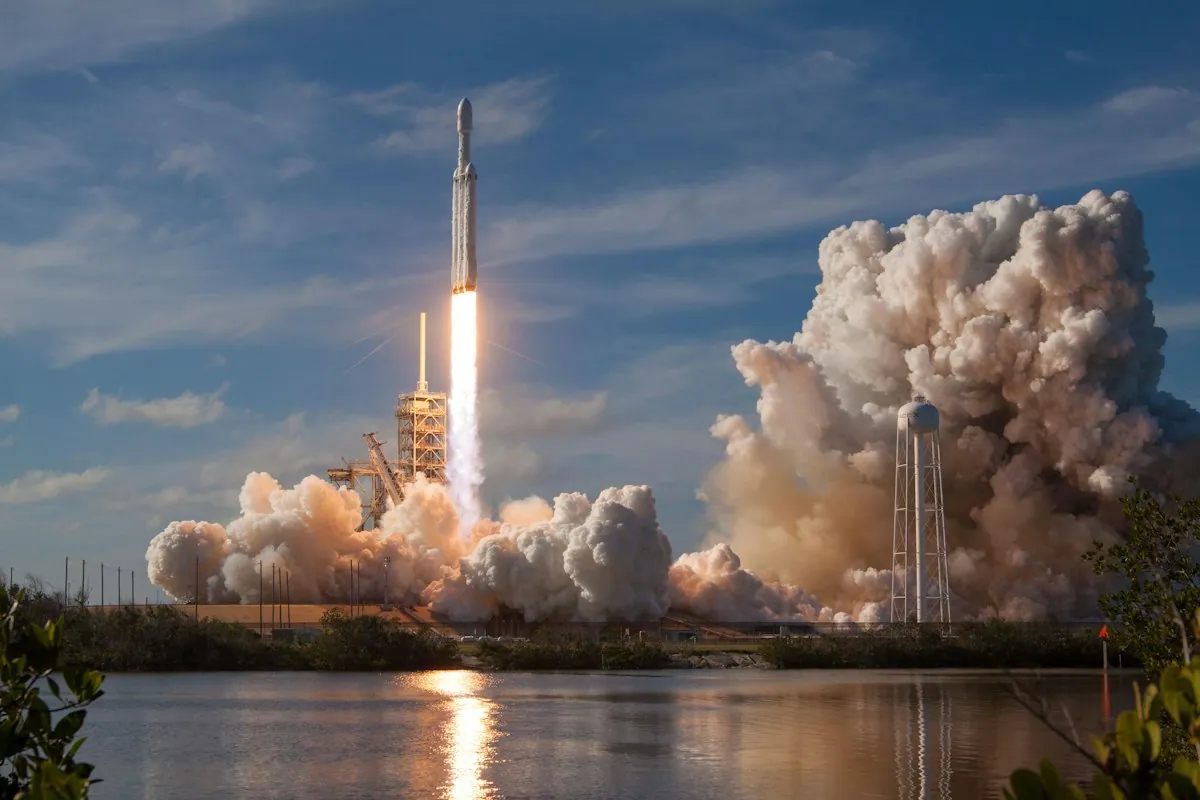
SpaceX planned to put its Starship megarocket into a full orbit for the first time on September 22, after 13 earlier test flights that all flew suborbital arcs and never circled Earth.
<blockquote><strong>Update, October 25:</strong> Flight 14 slipped to September 28 and reached orbit, deploying all 26 Starlink V3 satellites. A Raptor Vacuum engine shut down early during the ship's ascent burn, so flight controllers limited time in orbit and brought the ship down in the northern Pacific after about three hours instead of the planned ten. The Super Heavy booster also lost an engine during its boostback burn. SpaceX called the flight a success because it met both primary objectives (<a href="https://www.space.com/space-exploration/launches-spacecraft/spacex-starship-megarocket-flight-14-orbital-launch-success">Space.com</a>, <a href="https://www.cnn.com/2026/09/28/science/live-news/spacex-starship-flight-14-launch">CNN</a>, <a href="https://abcnews.com/US/spacex-attempt-starships-1st-orbital-flight-test/story?id=136805227">ABC News</a>).</blockquote>
What was different about Flight 14
Flight Test 14 launched from SpaceX's Starbase site in South Texas. The plan called for the upper stage to circle Earth about six times at roughly 275km over around ten hours, then deorbit for a splashdown in the Pacific west of Chile, a new recovery zone replacing the Indian Ocean used on recent flights.
| Item | Plan | Result |
|---|---|---|
| Launch date | September 22 (after slips from September 15 and 18) | September 28 |
| Orbit | About six orbits at about 275km over about 10 hours | Reached orbit; deorbited after about three hours |
| Payload | 26 Starlink V3 satellites | All 26 deployed and in contact |
| Splashdown | Pacific west of Chile | Northern Pacific |
| Engines | Nominal | One Raptor Vacuum shut down early; booster lost an engine on boostback |
The date slipped twice before the September 22 target, which SpaceX described as routine at this stage of development, and it slipped again afterwards. Elon Musk said SpaceX would likely try again in coming flights to catch the returning Super Heavy booster with the launch tower's arms, though Flight 14's main objective was reaching orbit, not a tower catch.
A paying job this time
Flight 14 was the first Starship flight to carry real cargo: 26 third-generation Starlink satellites to be deployed in orbit, making it the first flight expected to earn revenue rather than serve purely as a test. Earlier flights carried Starlink mass simulators or dummy hardware. Three of the deployed satellites were tasked with pointing cameras back at the ship to inspect its heat tiles, and SpaceX said it made contact with every satellite through laser links, ground stations and user terminals. SpaceX spokesperson Dan Huot said the flight "was like 20 Falcon 9 flights in terms of bandwidth" (Notebookcheck, Quartz).
It was also only the second Starship launch since SpaceX went public in June in what became the largest IPO in history, adding public-market scrutiny to the programme.
Why orbit matters
SpaceX describes orbital flight as the gateway to proving Starship can be fully and rapidly reused. Orbital refuelling, where one Starship transfers propellant to another in space, is required for Moon and Mars missions under NASA's Artemis programme and SpaceX's own plans, and it cannot be tested properly until Starship can reliably reach and operate in orbit.
No India-specific Starlink plans were tied to this flight.
What to watch next
The next questions are why the Raptor Vacuum engine shut down early, when SpaceX attempts a full-duration orbital flight, and when it tries orbital refuelling.
'/%3E%3Cstop offset='1' stop-color='rgb(34,52,84)'/%3E%3C/linearGradient%3E%3C/defs%3E%3Crect width='1200' height='675' fill='url(%23g)'/%3E%3Cg fill='rgb(110,200,255)'%3E%3Crect x='120' y='440' width='56' height='110' rx='6'/%3E%3Crect x='196' y='405' width='56' height='145' rx='6'/%3E%3Crect x='272' y='360' width='56' height='190' rx='6'/%3E%3Crect x='348' y='315' width='56' height='235' rx='6'/%3E%3Crect x='424' y='255' width='56' height='295' rx='6'/%3E%3Crect x='500' y='195' width='56' height='355' rx='6'/%3E%3C/g%3E%3Cg fill='rgb(140,150,175)'%3E%3Crect x='680' y='470' width='56' height='80' rx='6'/%3E%3Crect x='756' y='466' width='56' height='84' rx='6'/%3E%3Crect x='832' y='472' width='56' height='78' rx='6'/%3E%3Crect x='908' y='468' width='56' height='82' rx='6'/%3E%3Crect x='984' y='465' width='56' height='85' rx='6'/%3E%3Crect x='1060' y='470' width='56' height='80' rx='6'/%3E%3C/g%3E%3Crect x='100' y='556' width='1036' height='6' rx='3' fill='rgb(220,230,245)'/%3E%3Ccircle cx='620' cy='200' r='16' fill='rgb(255,200,90)'/%3E%3C/svg%3E)

'/%3E%3Cstop offset='1' stop-color='rgb(70,40,90)'/%3E%3C/linearGradient%3E%3C/defs%3E%3Crect width='1200' height='675' fill='url(%23g)'/%3E%3Cg stroke='rgb(240,200,120)' stroke-width='10' stroke-linecap='round' fill='none'%3E%3Cpath d='M600 150V540M480 540H720M360 220H840'/%3E%3Cpath d='M360 220L290 360H430ZM840 220L770 360H910Z'/%3E%3C/g%3E%3Ccircle cx='600' cy='140' r='18' fill='rgb(240,200,120)'/%3E%3Cpath d='M290 360A70 40 0 0 0 430 360ZM770 360A70 40 0 0 0 910 360Z' fill='rgb(240,200,120)'/%3E%3C/svg%3E)
'/%3E%3Cstop offset='1' stop-color='rgb(22,84,90)'/%3E%3C/linearGradient%3E%3C/defs%3E%3Crect width='1200' height='675' fill='url(%23a)'/%3E%3Cg fill='rgb(120,230,210)'%3E%3Crect x='230' y='420' width='110' height='140' rx='10' opacity='.45'/%3E%3Crect x='390' y='350' width='110' height='210' rx='10' opacity='.6'/%3E%3Crect x='550' y='270' width='110' height='290' rx='10' opacity='.75'/%3E%3Crect x='710' y='170' width='110' height='390' rx='10'/%3E%3C/g%3E%3Cg fill='none' stroke='rgb(255,215,120)' stroke-width='6' stroke-linecap='round'%3E%3Cpath d='M240 400L400 330 560 250 765 140'/%3E%3C/g%3E%3Cg fill='rgb(255,215,120)'%3E%3Ccircle cx='240' cy='400' r='14'/%3E%3Ccircle cx='400' cy='330' r='14'/%3E%3Ccircle cx='560' cy='250' r='14'/%3E%3Ccircle cx='765' cy='140' r='14'/%3E%3C/g%3E%3Cg fill='none' stroke='rgb(120,230,210)' stroke-opacity='.5' stroke-width='4'%3E%3Ccircle cx='980' cy='230' r='70'/%3E%3Ccircle cx='980' cy='230' r='120'/%3E%3C/g%3E%3Crect x='180' y='575' width='700' height='6' rx='3' fill='rgb(120,230,210)' opacity='.6'/%3E%3C/svg%3E)