Nikon Strips Small World in Motion Winner of First Prize Over Generative AI Rules
The winning cilia video broke the contest's generative AI rules, Nikon says. A roundworm video by Vietnam's Nguyen Nam Nhat now takes the $3,000 top prize.
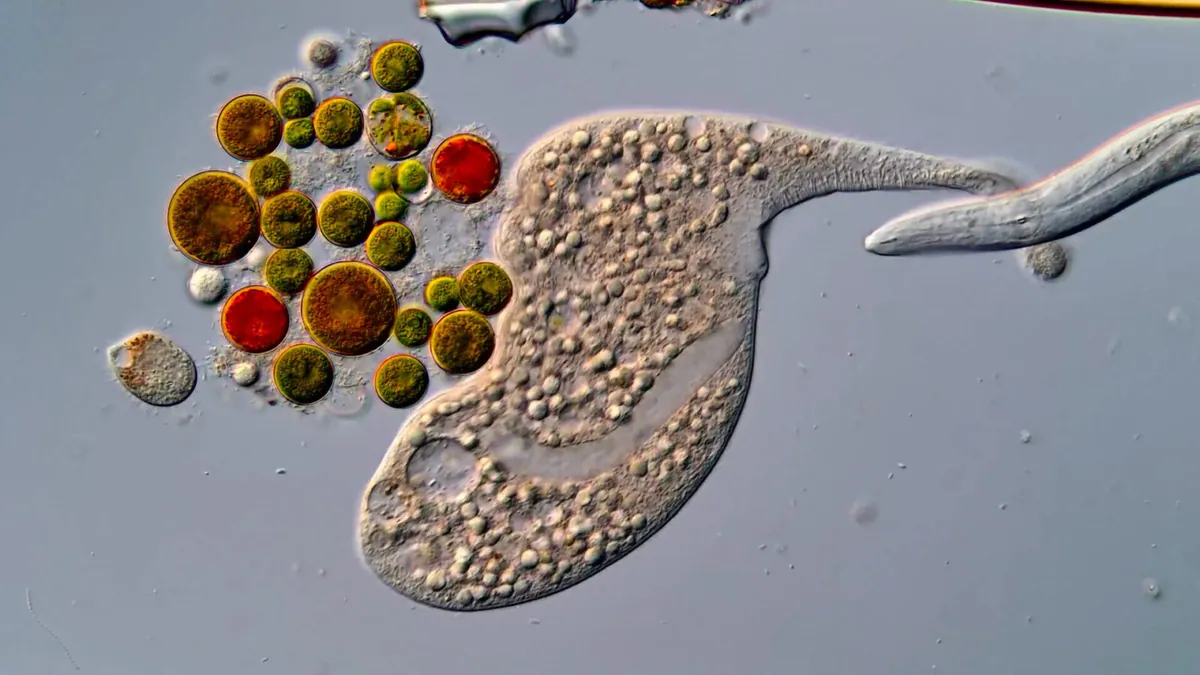
Nikon has stripped first place from its Small World in Motion 2026 video competition after deciding the winning entry broke the contest's rules on generative AI. After re-evaluating the video and consulting its judging panel, Nikon reworked the rankings, and a video of a roundworm and a single-celled organism now takes the $3,000 top prize (PetaPixel, Digital Camera World).
What Nikon announced
Nikon's statement on the Small World website, dated October 9, 2026, says the winning video "did not comply with the competition rules regarding generative AI." The rules state that AI-generated videos are not permitted and that the sponsor may ask for original footage to verify an entry. Nikon did not say exactly how the rules were broken, stressed that the ruling concerns eligibility only and is not a judgment of the entrant's reputation, scientific contributions or intent, and said it will review its rules and evaluation procedures for future editions.
Reports name the disqualified entrant as Dr Ning Xu. The video showed abnormal beating of airway cilia, the tiny hair-like structures lining the airway, in a child with primary ciliary dyskinesia, a rare genetic condition that affects breathing, reportedly shot at 100x magnification.
How the controversy built
TechRadar reported on October 1 that microscopists had serious doubts about the clip, saying the cilia were the wrong shape, looked too large and did not move as real cilia do. Edward Phelps of the University of Florida described "serious problems," including elements popping in and out of existence; Robert Hirst of the University of Leicester said "some of these features just are not consistent with nature" (IFLScience). A PhD student at UT Southwestern Medical Center also claimed to have found an embedded SynthID watermark, Google's marker for content made with its generative tools; Nikon has not confirmed that.
Xu denied breaking the rules, saying AI was not used to generate the footage, the cilia or their motion, but was applied afterwards to separate and colour structures in reconstructed grayscale images. Using AI to enhance or segment an image is different from generating one, and that line is exactly what the dispute turns on.
The new results
| Place | Entrant | Video |
|---|---|---|
| 1st ($3,000) | Nguyen Nam Nhat (moved up from 2nd) | A tiny roundworm alongside a single-celled Dileptus, Chu Se, Vietnam; differential interference contrast at 40x |
| 2nd | Benedikt Pleyer | Jellyfish larvae |
| 3rd | Dr Andrew Moore | Synchronised cell division in neighbouring cells |
Why it matters for imaging
Small World showcases photomicrography and Nikon's microscopy business; its appeal is that the footage is a real record of what a microscope captured, so a winner that cannot be trusted undercuts the whole contest. The case also shows how hard AI is to police: detection tools rely on watermarks embedded by companies acting in good faith, so a clip made with a tool that adds no mark can slip through, while a clip merely enhanced by AI may carry a mark that suggests more than happened. Rules banning AI-generated work but allowing AI-assisted processing depend on definitions that entrants and judges read differently.
What to watch next
Nikon's revised rules for future editions, whether it publishes more on how the entry broke them, and how other photography contests define AI-assisted processing.